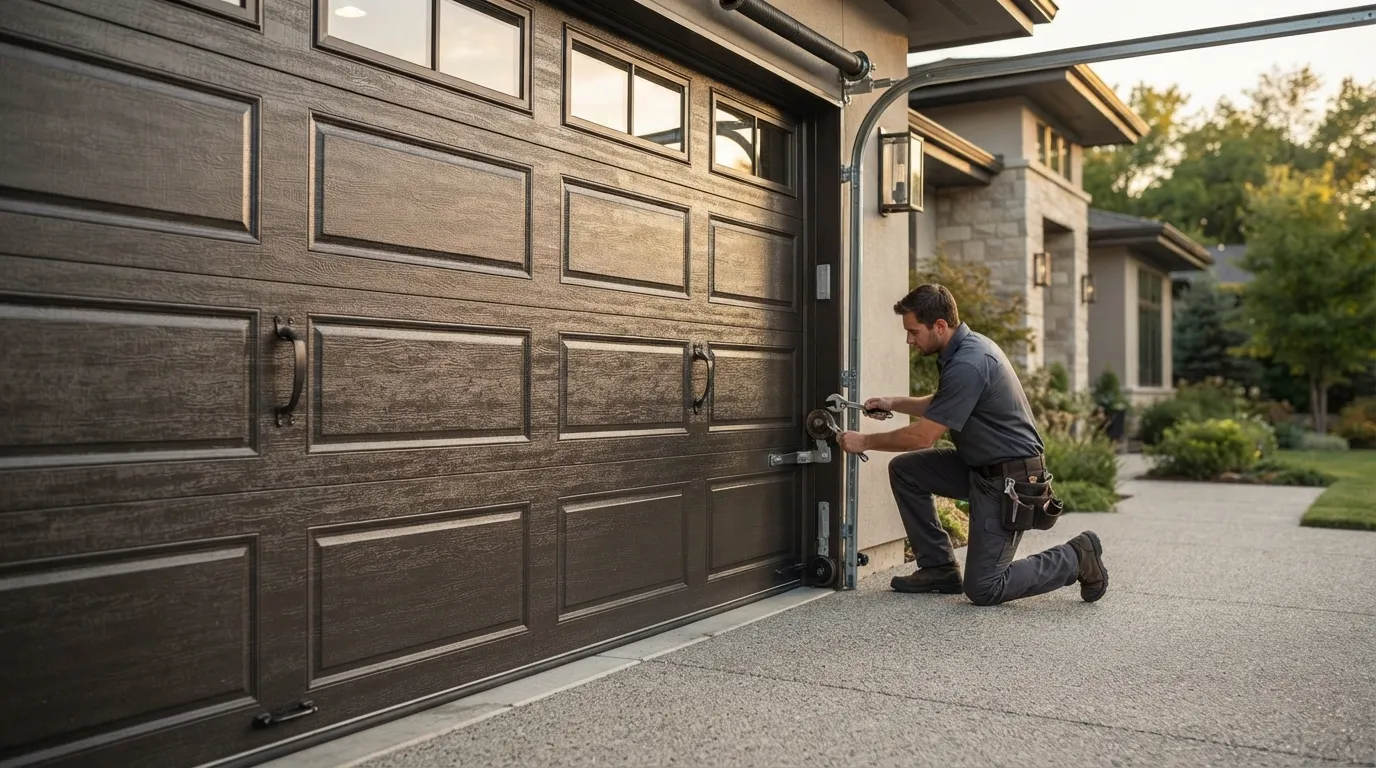
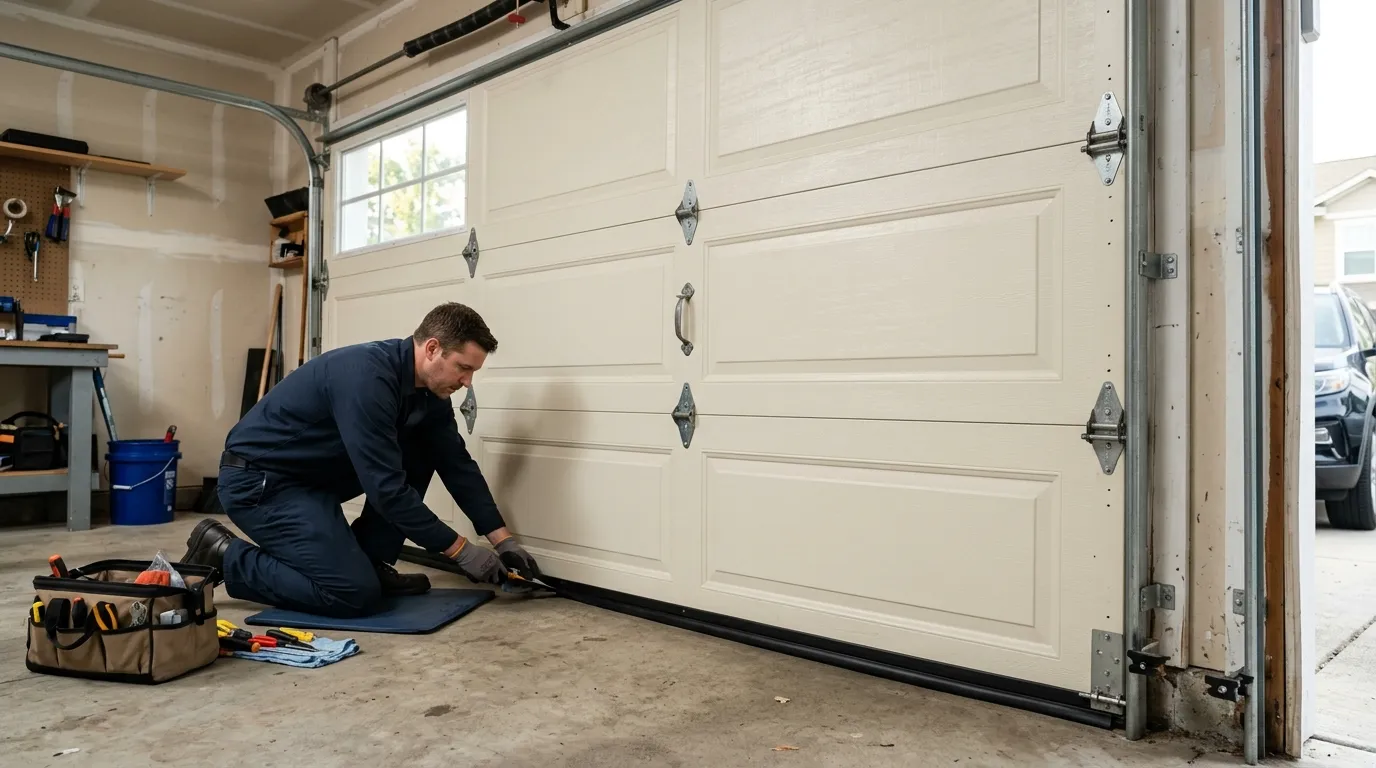
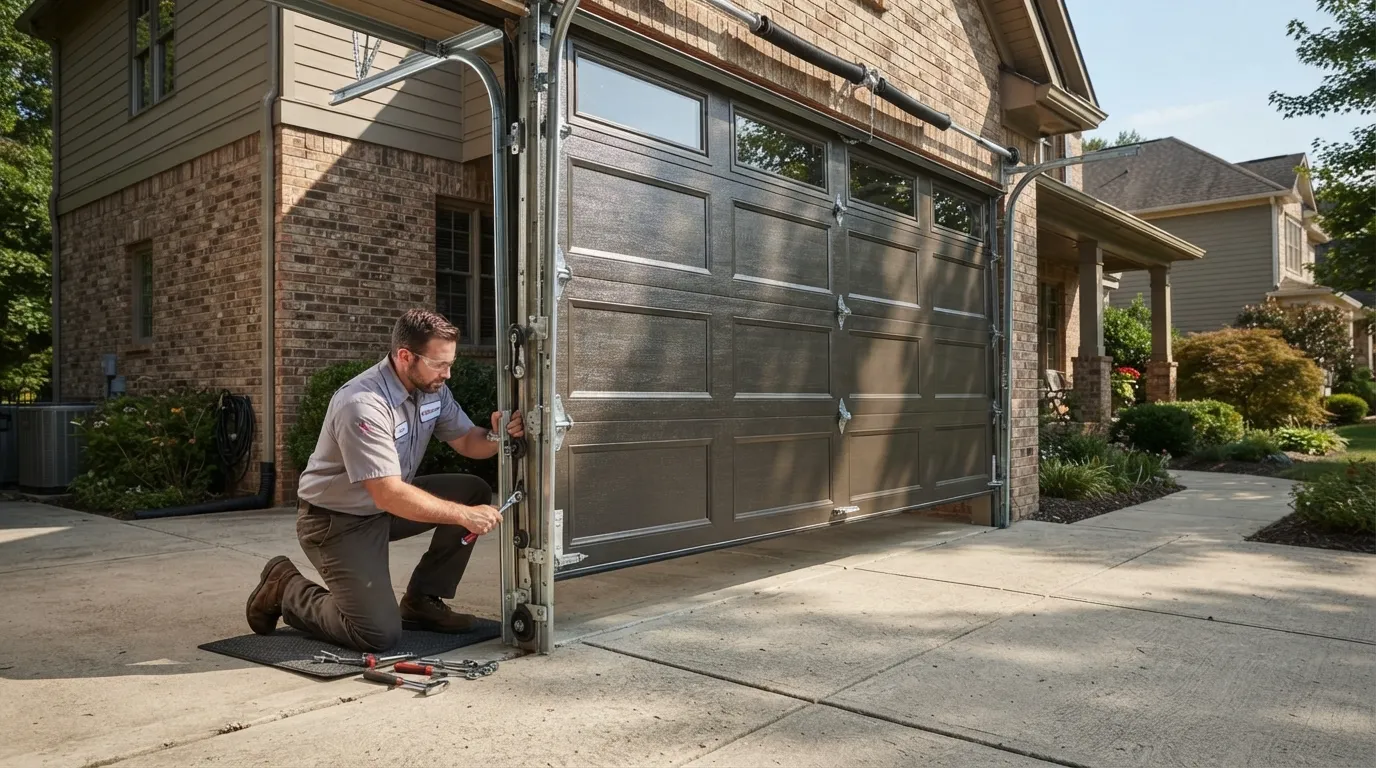
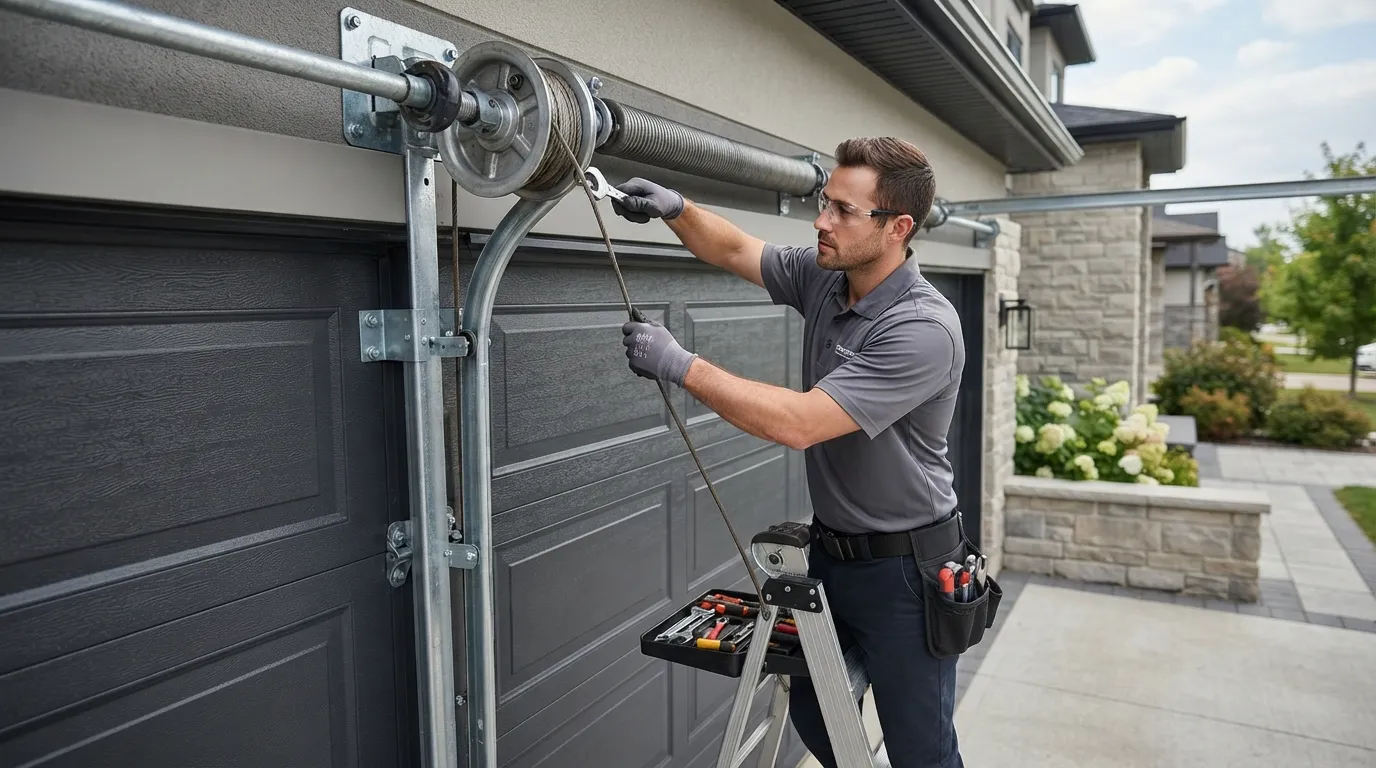
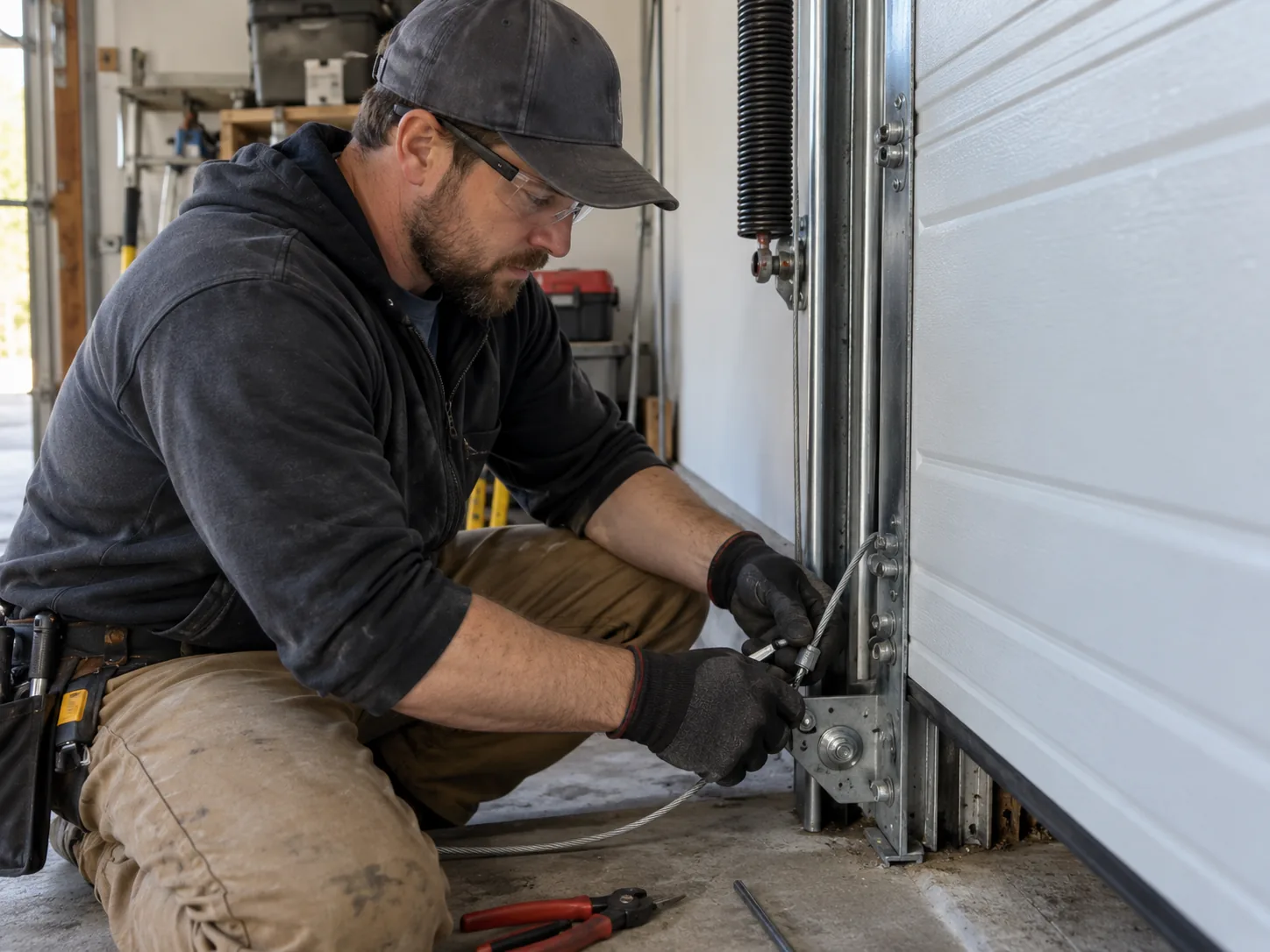
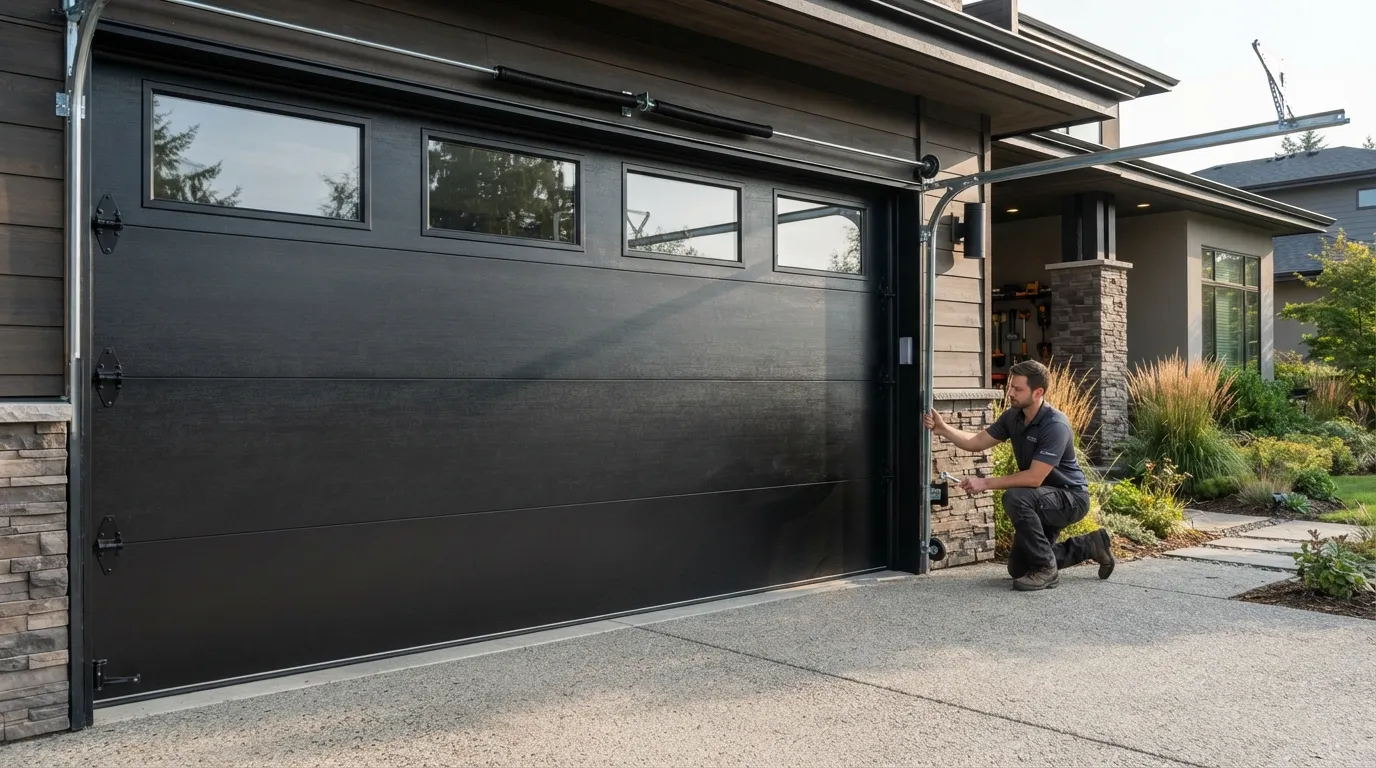
Housing across the Rochester area was mostly built between 1938 and 1987, with the median falling around 1967 and the bulk of the stock dating from the 1960s and 70s. That matters for track problems more than most owners realize. Doors from that era were hung on steel track bolted straight to wood jambs, and after 50-plus years those jambs have moved - shrunk, swelled, settled a little with the house. The track doesn't move with them. It stays bolted where it was in 1967, and the gap between roller and rail either narrows or widens depending on the season.
Then there's the winters. This area sits in a severe cold climate band, and cold does two things to a garage door track: it stiffens the lubricant so rollers drag instead of roll, and it shrinks the steel rail itself by a hair. A hair is enough. A door that rode true in August can bind, jump the flange, or walk sideways off the track by January. None of this is a defect in the door. It's what original-era hardware does when it's asked to keep working through five or six decades of freeze-thaw cycles it was never built to survive without adjustment.