
Safety sensor standard updates
Second most common: safety sensors that were never updated to modern standards, which means the door won't reverse properly if something's in the way, or won't close at all once the photo eyes drift out of alignment.
Rochester, NY
Garage door opener installs for Rochester's 1960s-era housing stock, built for the cold. Serving Rochester and nearby towns within a 20-mile radius.
Local causes
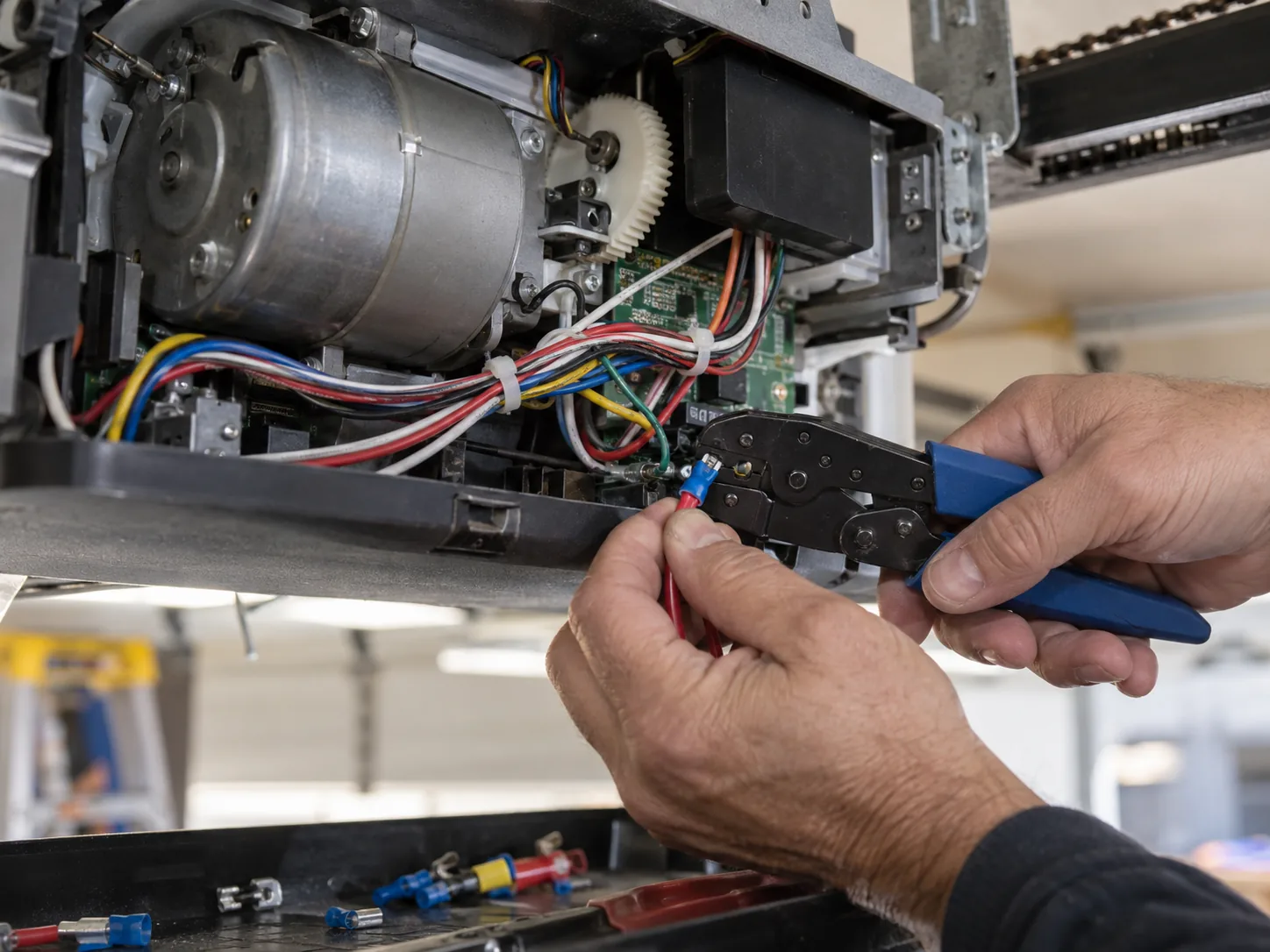
Most of the housing stock we work on went up between 1938 and 1987, with the median build year landing around 1967. That means a huge share of the openers we replace are either the original unit from whenever the house was built, or a second-generation opener installed sometime in the 80s or 90s that's now well past its working life. Chain-drive openers from that era weren't built with today's safety sensors, rolling codes, or battery backup, and the gears inside the housing wear out from decades of use in a cold-severe climate. Cold matters more than people think. Grease inside an old opener thickens when temperatures drop, motors strain harder to pull a door that's stiffened up overnight, and circuit boards in unsealed housings take moisture damage over enough winters. Across the 32 named areas we work in - from the city neighborhoods out toward the surrounding towns - this same pattern repeats: a mid-century house, an opener nobody's touched since the Clinton administration, and a homeowner who just wants it to open every time they hit the button, including the mornings it's fifteen below.
Watch-outs
The most common failure on old installs is a worn drive gear inside the motor head - it strips down slowly, so the door gets louder and slower for months before it quits outright.
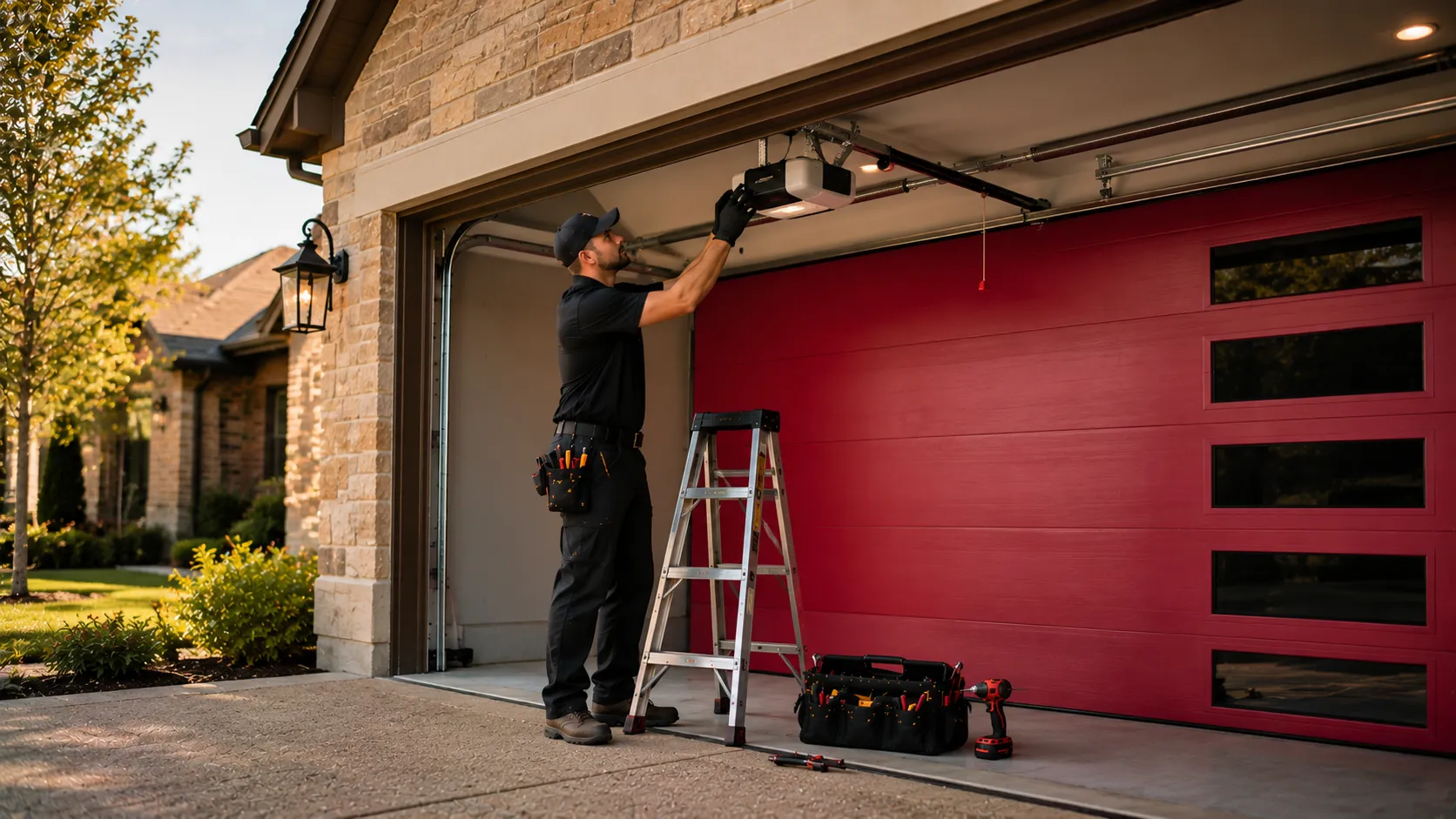
Second most common: safety sensors that were never updated to modern standards, which means the door won't reverse properly if something's in the way, or won't close at all once the photo eyes drift out of alignment.
On houses in this area's older stock, we also see openers mounted on brackets that were never rated for the weight of the door installed later, especially where a lighter original door got swapped for a heavier insulated one.
A mismatch like that shortens the life of a brand-new opener fast, no matter how good the unit is. Cold makes all of it worse. A motor already working near its limit on a marginal bracket or a stripped gear is the one that fails on the coldest morning of the year, not the mildest one.
Our process
We size the opener to the door you actually have now, not the door that was there when the house was built - horsepower, drive type, and mounting all get checked against the current panel weight before anything goes on the wall.
For a climate this cold, we default to units with sealed circuit boards and battery backup, since a garage door opener that quits during a winter power outage is worse than one that just wears out on its own schedule.
We also re-set safety sensor height and alignment as part of every install, not as an add-on, since that's the part most likely to have drifted or never been correct on an older setup.
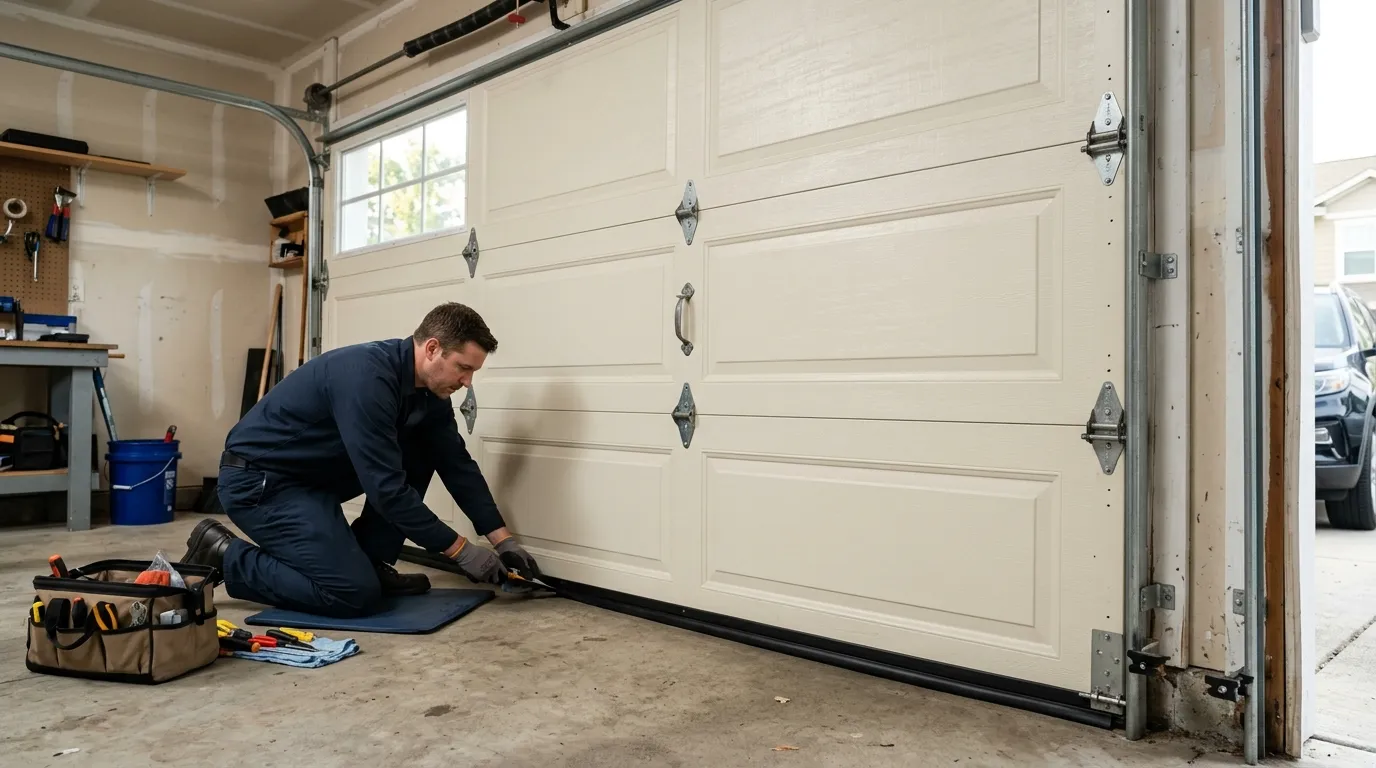
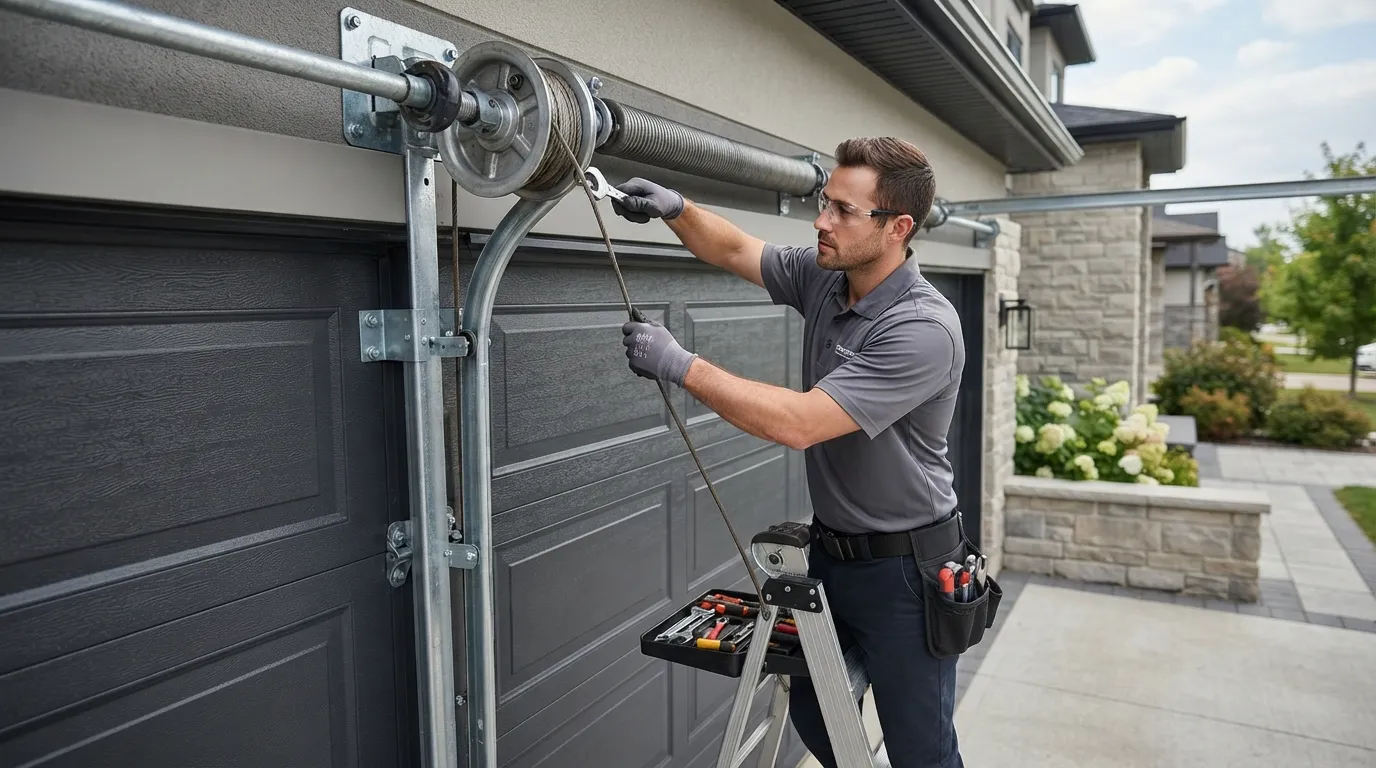
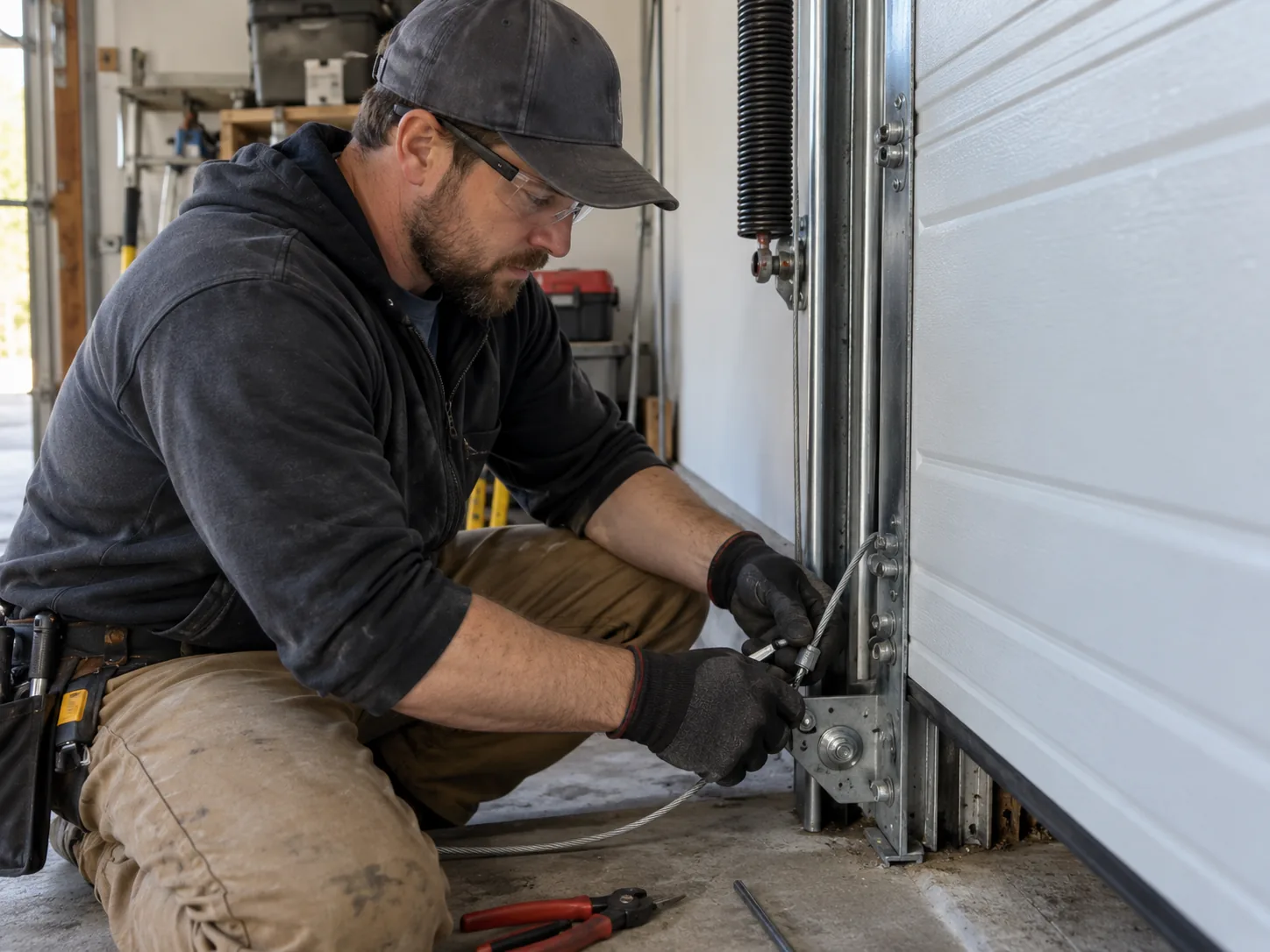
One honest limit: if your door itself is out of balance, has a bent track, or the springs are shot, we're not going to bolt a new opener onto a bad door and call it fixed. That's a second problem, and we'll tell you before we start, not after.
Warning signs
You'll usually notice it first as hesitation - the door starts to lift, stalls, then finishes the movement a second later, especially on a cold morning.
Sometimes it's noise: a grinding or rattling from the motor head that wasn't there a year ago. Other times the remote works from ten feet away but not from the car in the driveway, which usually points to a weak receiver rather than anything wrong with the door.
The clearest sign in this area is timing - openers here tend to fail in the coldest stretch of winter, not gradually across the year, because that's when a marginal motor and stiff hardware finally hit their limit together.
If your opener is original to a house built anywhere near the 1960s-70s range that makes up most of this area's stock, age alone is reason enough to have it looked at before it picks its own moment to quit.
Questions
If the unit is original to a house from the 1960s-70s era common across this area, or it's a chain-drive model without modern safety sensors, repair parts get hard to source and the labor to fix an old gearbox often costs close to a new unit. We'll tell you the real number before you decide either way.
Yes, and given how cold winters get here, we generally recommend it. A battery backup keeps the opener working through a power outage, which matters most on the exact kind of night this area's climate produces most often.
Usually, but we check the door's weight, track condition, and spring balance first. An opener sized wrong for the door - especially a heavier insulated panel replacing a lighter original one - won't last, so we match the unit to what's actually hanging on the track now.
We cover Rochester and the surrounding towns within about a 20-mile radius, including areas like Irondequoit, Gates, Brighton, Greece, and out to Brockport and Victor. Each town has its own page with details specific to that area.
Explore more
Ready when you are
Rochester Garage Door Pros repairs and installs garage doors, springs and openers in Rochester, NY and the surrounding area.