
Guide
Buying a Replacement Door Here in Rochester
Rochester homes mostly date to 1938-1987, and the region's severe cold puts real demands on a garage door. Here's what actually matters before you replace one.
Local detail
What Local Conditions Do
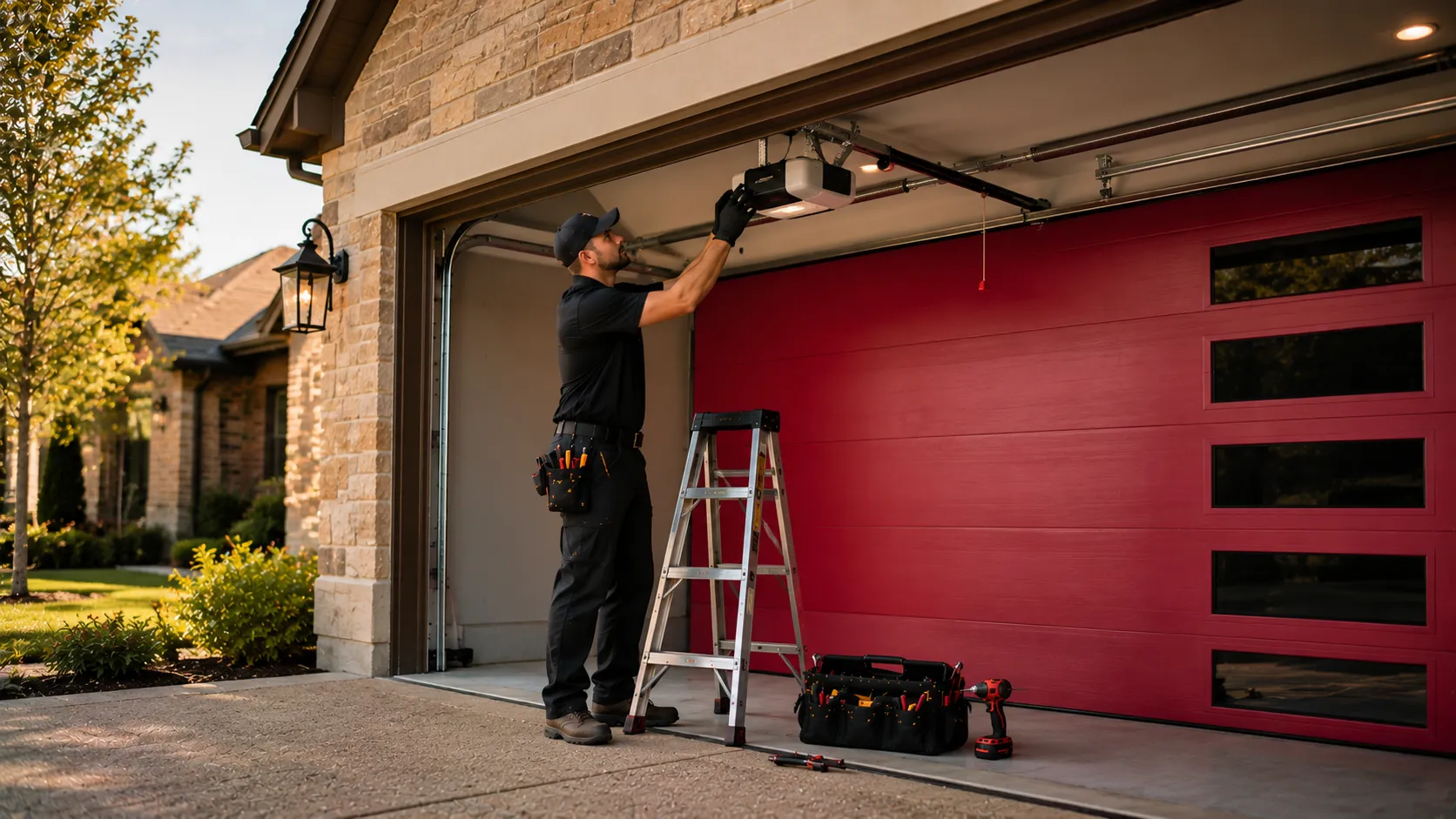
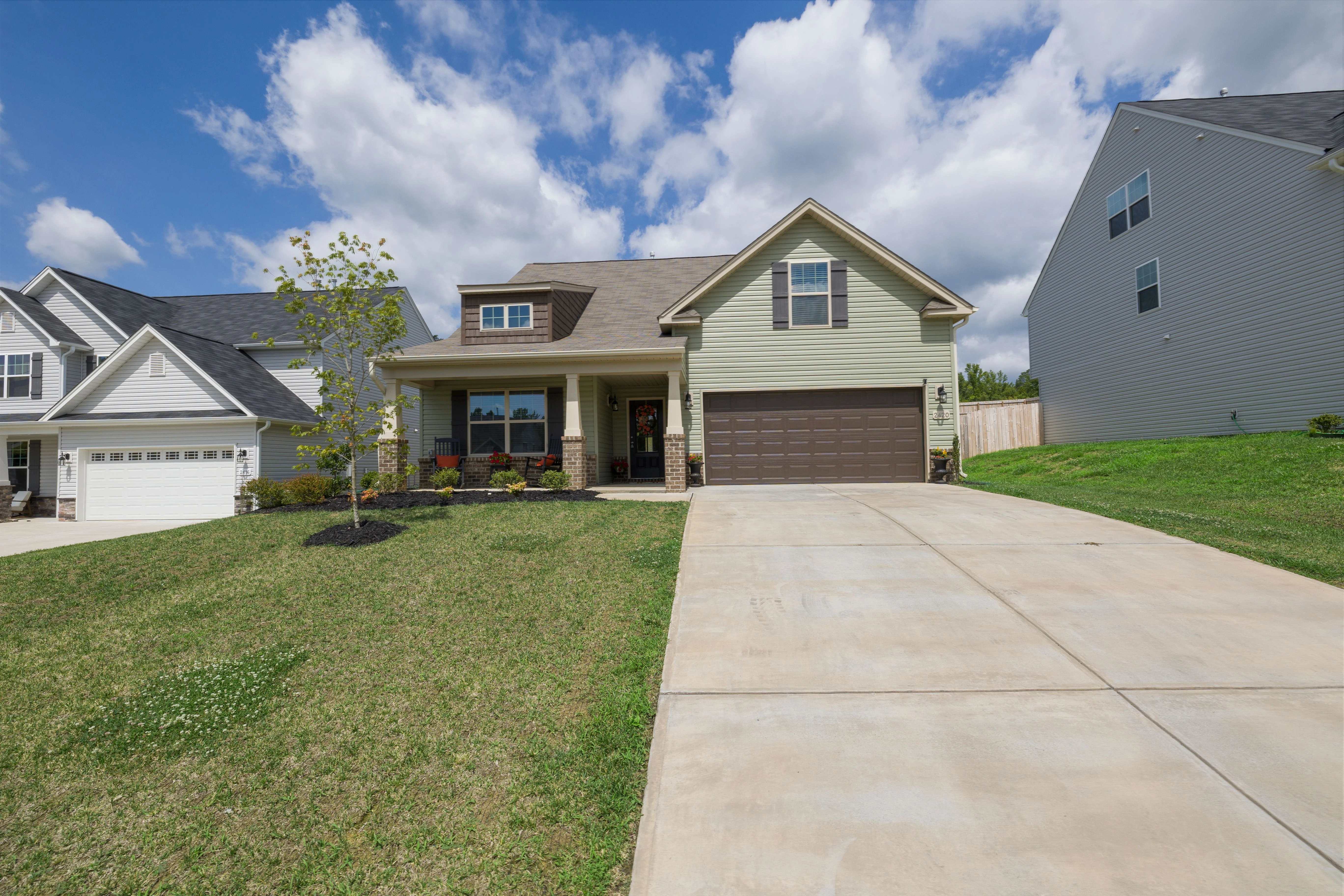
Rochester sits in a severe cold climate band, and that changes what a garage door needs to do here versus somewhere milder. Steel contracts and expands more in a winter that swings hard, seals harden and crack faster, and a door with no thermal break will pull cold straight into an attached garage. That matters more than it sounds like because most of the housing across Rochester's 32 named neighborhoods was built between 1960 and 1979, with a citywide median build year of 1967. Openings from that era were framed for single-layer steel or wood doors, no insulation requirement, no vapor barrier behind the track.
If your garage backs onto a finished room, or if you park a car you actually want to start on a January morning, an uninsulated original door is working against you every day it's up there. Replacement isn't just a style upgrade in this climate - it's closing a gap between what a 1960s opening assumed and what a Rochester winter actually does to a garage. That's the piece that gets skipped when people shop by price alone.
The area
What It Costs
We're not going to hand you a number here, because a fair price depends on the opening, not the town, and giving you one without seeing your garage would be a guess dressed up as a fact. What we can tell you is what drives cost in this area specifically. A lot of Rochester's housing predates current door widths and insulation standards, so a straight swap isn't always straight - jamb repair, header work, or non-standard sizing show up more often in homes from the 1960s and 70s than in new construction.
Insulation level matters too, given the climate band we're in; a door built for this winter costs more upfront than a bare single-layer panel, but it's doing a job the original door was never asked to do. At a median household income of $80,135, most owners we talk to are weighing a door that holds up through another fifteen winters against one that's just cheap now. That's a real trade-off, and it's worth asking your installer to walk through it rather than just quoting the lowest option.
What we find
What Is Going On
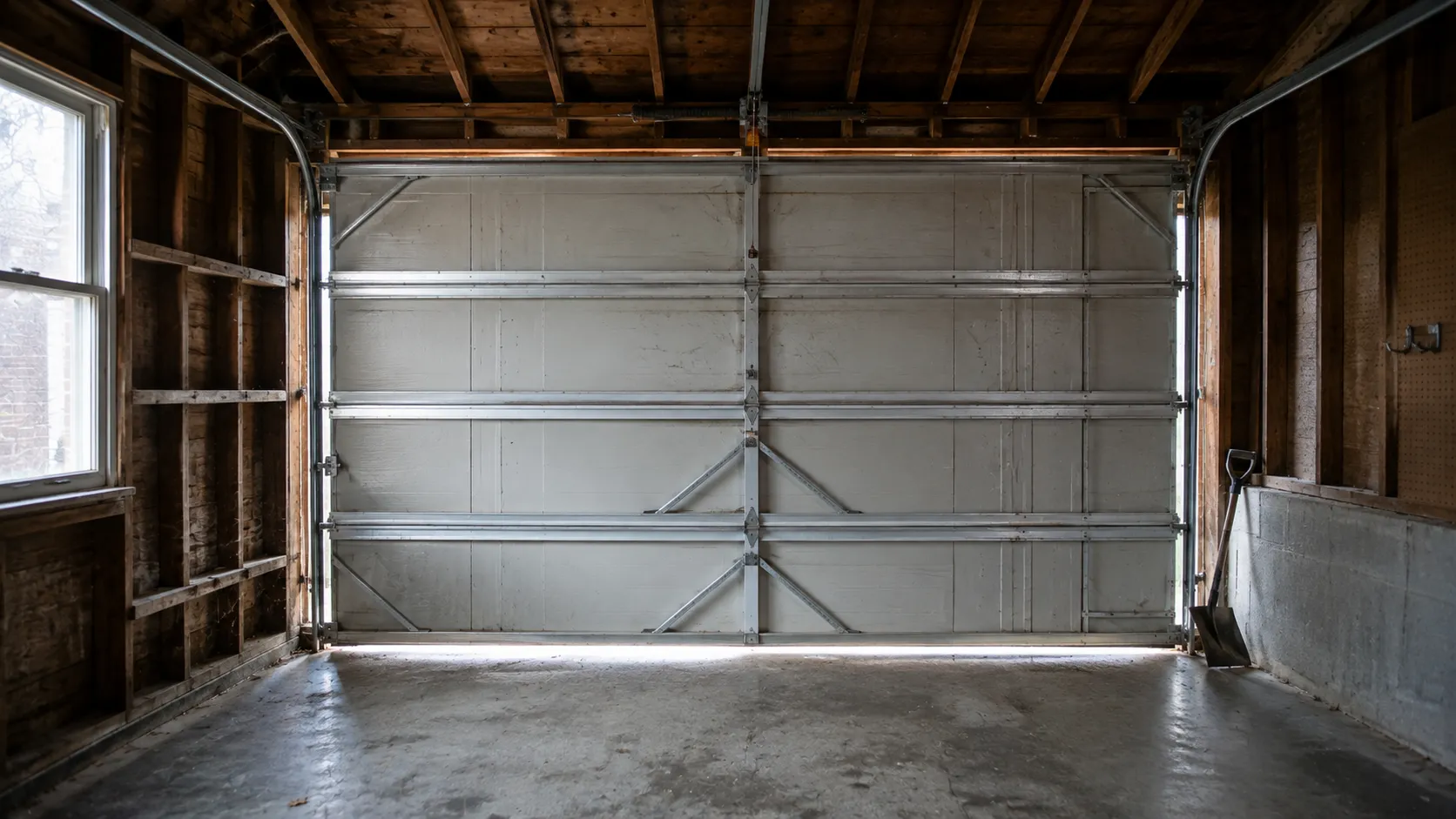
Across the service area there are 128,344 households and 64,958 owner-occupied houses, and a large share of those houses carry doors that are simply reaching the end of what 1960s-70s hardware was built to do. Springs on a door installed when the house was new have long since exceeded their cycle count. Tracks bolted to jambs that have settled over five or six decades don't run true anymore. None of that is a defect - it's just what happens to hardware that outlives its design life by a couple of generations.
What's changed is the climate load on top of it. A severe cold band means more expansion-contraction cycles per winter, more stress on old seals and old springs, and less margin for a panel that's already fatigued. So what looks like a sudden failure - a door that won't close right, a spring that lets go on a cold morning - is usually the last step of decades of wear that started with a house built in 1967 and a door that was never meant to be the last one.
How we work
When It Stops Being a DIY Job
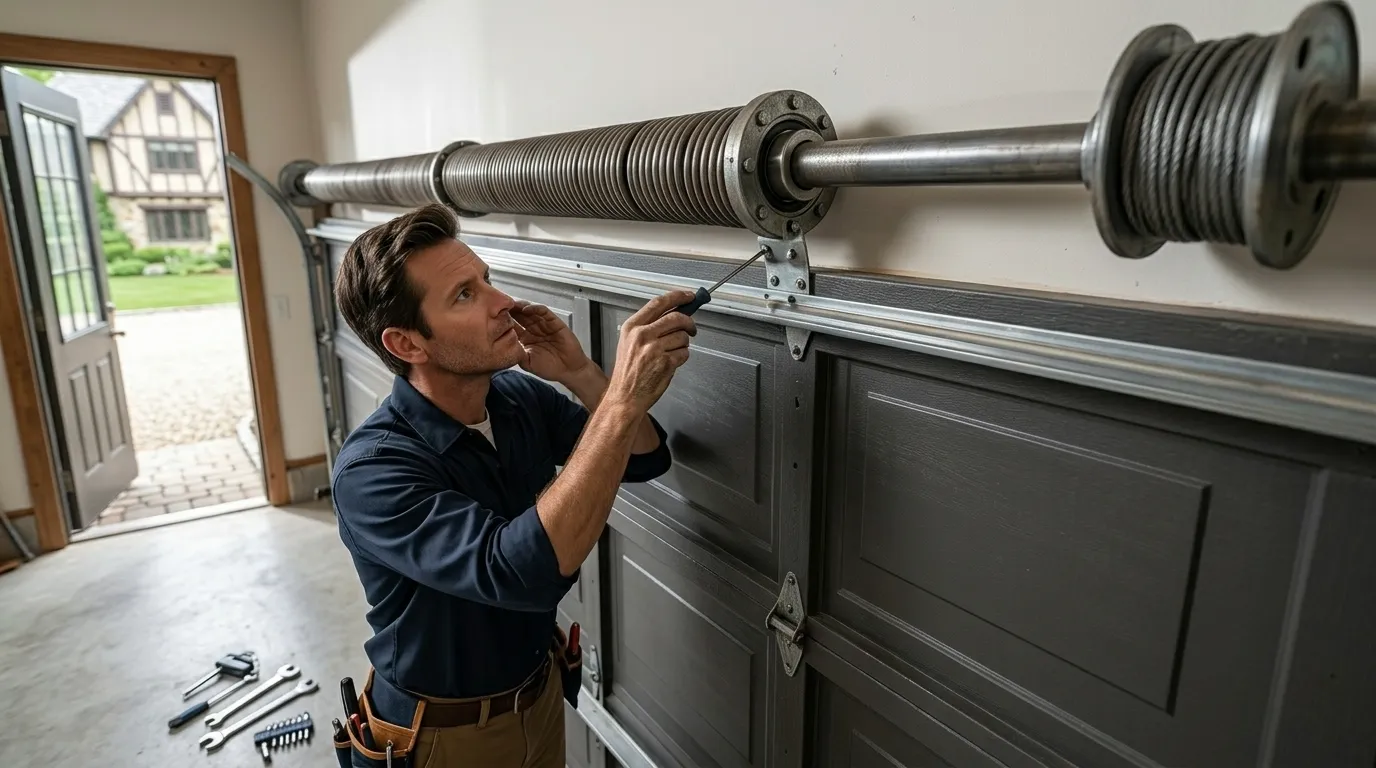
A torsion spring under tension is not a weekend project on any door, in any town, and we won't pretend otherwise. But there's a Rochester-specific wrinkle worth knowing: cold slows everything down. Sealant that's supposed to cure in an afternoon can take a full day below freezing, lubricant thickens, and a track that's slightly out of alignment on a mild day can bind hard once the temperature drops.
Combine that with the older, non-standard openings common in houses built before 1988, and a repair that would be routine on new construction can turn into a framing problem you didn't budget for. If your garage is original to a house from that 1960s-70s era and the opening isn't a stock size, or if you're dealing with a broken spring, bent track, or a door that's come off its rollers, that's the point to call rather than push through it yourself. The honest limit here: we don't do cosmetic touch-ups on doors that are structurally near the end - if the panel's failing, we'll tell you replacement makes more sense than a patch.
Questions
Common questions
Why does my garage door struggle more in winter here than it seems to for people in other states?
Rochester falls in a severe cold climate band, which means more freeze-thaw cycling on seals, springs, and track hardware each winter. A door without insulation or a proper thermal break takes that stress directly, and older doors built for houses from the 1960s and 70s were never designed with that load in mind.
My house was built in the 1960s - will a new door just bolt onto the existing opening?
Not always. A lot of Rochester housing dates to 1938-1987 with openings framed for older, non-standard door sizes. We check jamb condition and opening width before quoting, since a straight swap sometimes needs header or framing work first.
Is it worth paying for an insulated door here?
Given the severe cold band this area sits in, insulation isn't cosmetic - it affects how much cold transfers into an attached garage and how hard the seals and hardware work each winter. Whether it's worth it for your house depends on the garage's use, which we're glad to talk through.
Ready when you are
Need a garage door sorted in Rochester?
Rochester Garage Door Pros repairs and installs garage doors, springs and openers in Rochester, NY and the surrounding area.