
Guide
Why Your Garage Door Jumped Its Track
Rochester's 1960s-70s housing stock and severe winters put specific stress on garage door tracks. Here's what actually causes it and when to call a pro.
Local detail
What Local Conditions Do
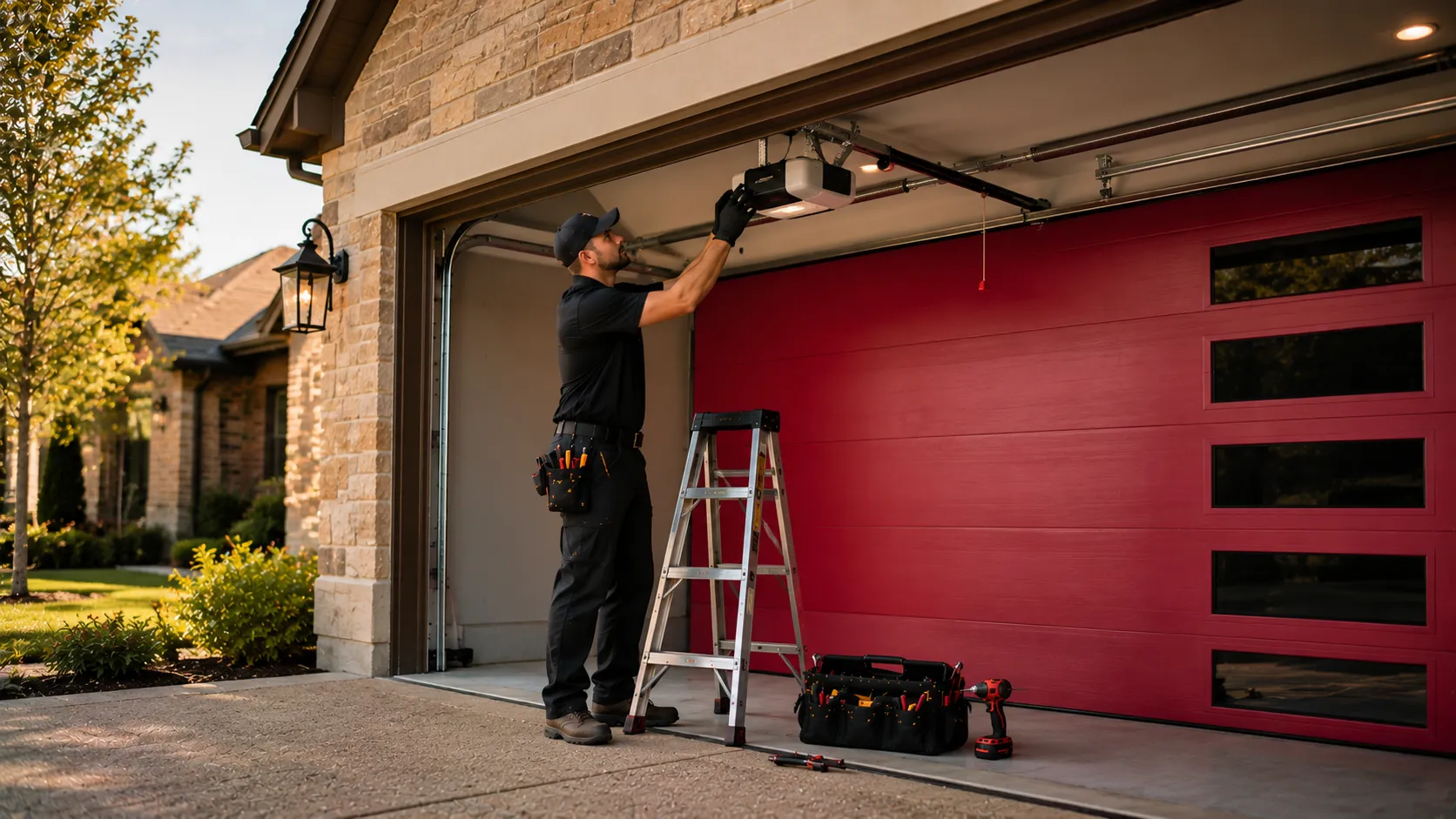
Rochester sits in a COLD severe climate band, and that matters more for garage doors than most homeowners realize. A track is only as good as its alignment, and alignment shifts with temperature. When the slab under your door heats and cools through a hard freeze-thaw cycle every winter, the track brackets bolted to wood framing work loose a fraction of a millimeter at a time. You don't see it happen. You see it on the morning the door jerks sideways instead of rolling straight.
Across the 32 named areas that make up most of the local housing stock, this shows up earliest on doors that were never re-leveled after the original install. Ice buildup at the base of the track is the other local factor - a door that drags through even a quarter inch of ice at the bottom roller will bend the track flange over a season or two, and a bent flange is what actually throws rollers off. It's not usually one dramatic event. It's a slow drift that ends with a bang.
The area
What It Costs
We don't have a set price to quote here, and any number we gave you without seeing the door would be a guess dressed up as a fact. What we can tell you is what drives the cost up or down: whether the track itself is bent (replace the section, don't hammer it straight - a hammered track fails again) or just knocked loose from its bracket (a re-level and re-fasten job), and whether the rollers that jumped are still round or have worn flat spots from years on original 1960s-70s hardware.
Household income in the service area runs a median of $80,135, and that's relevant only in one way: it tells us most of the doors we're called out for were bought to last, not bought cheap. That usually means steel track and steel rollers rather than the thin aluminum sometimes used in lower-cost builds, which is good news, because steel bends back into service more often than it needs full replacement.
What we find
What Is Going On
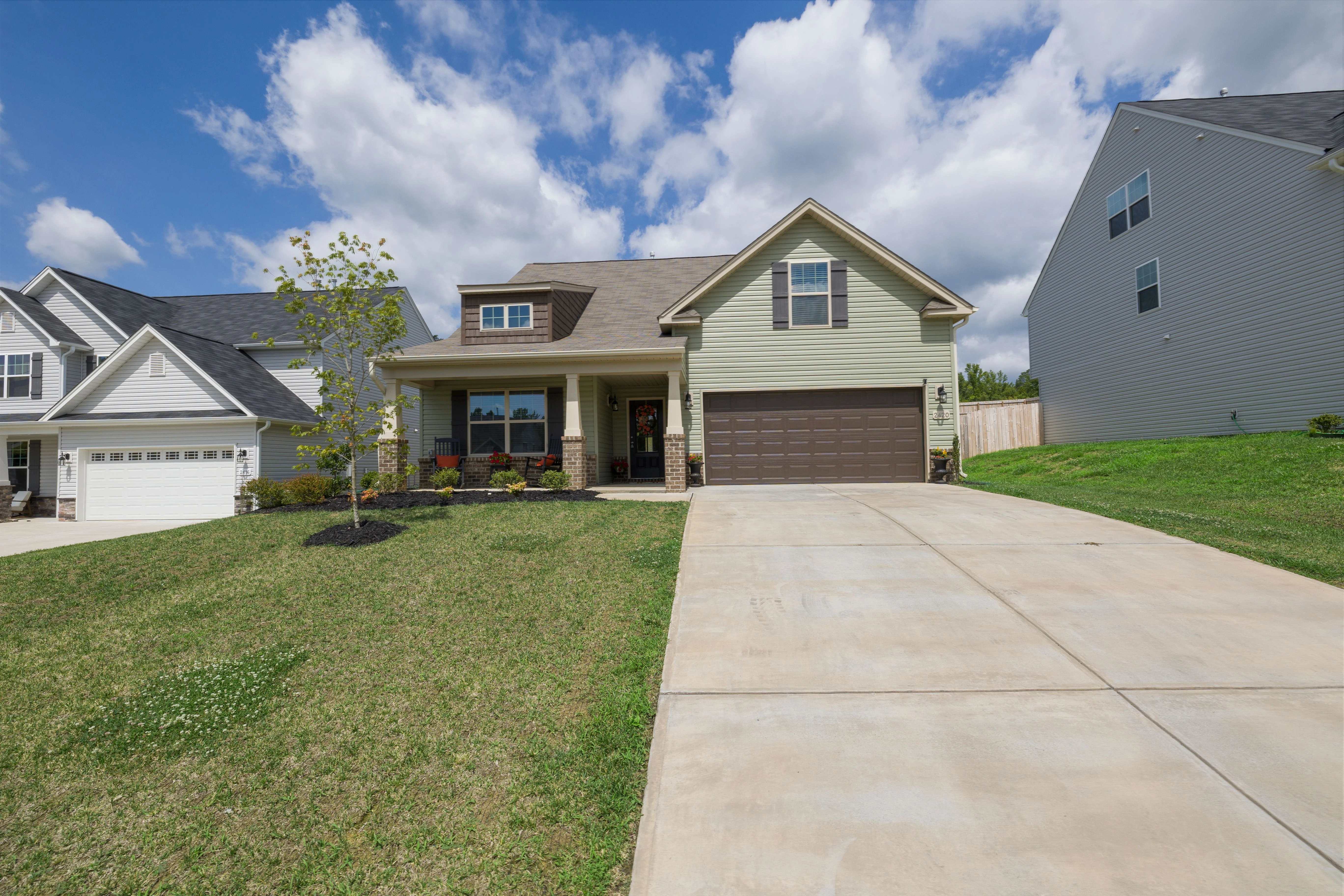
Most of the housing here was built between 1938 and 1987, with the median right around 1967. That means a large share of the doors we look at are on track hardware that's either original or a straight like-for-like replacement from decades ago - side-mounted torsion or extension setups with brackets spaced for door weights and stud layouts that builders don't use anymore.
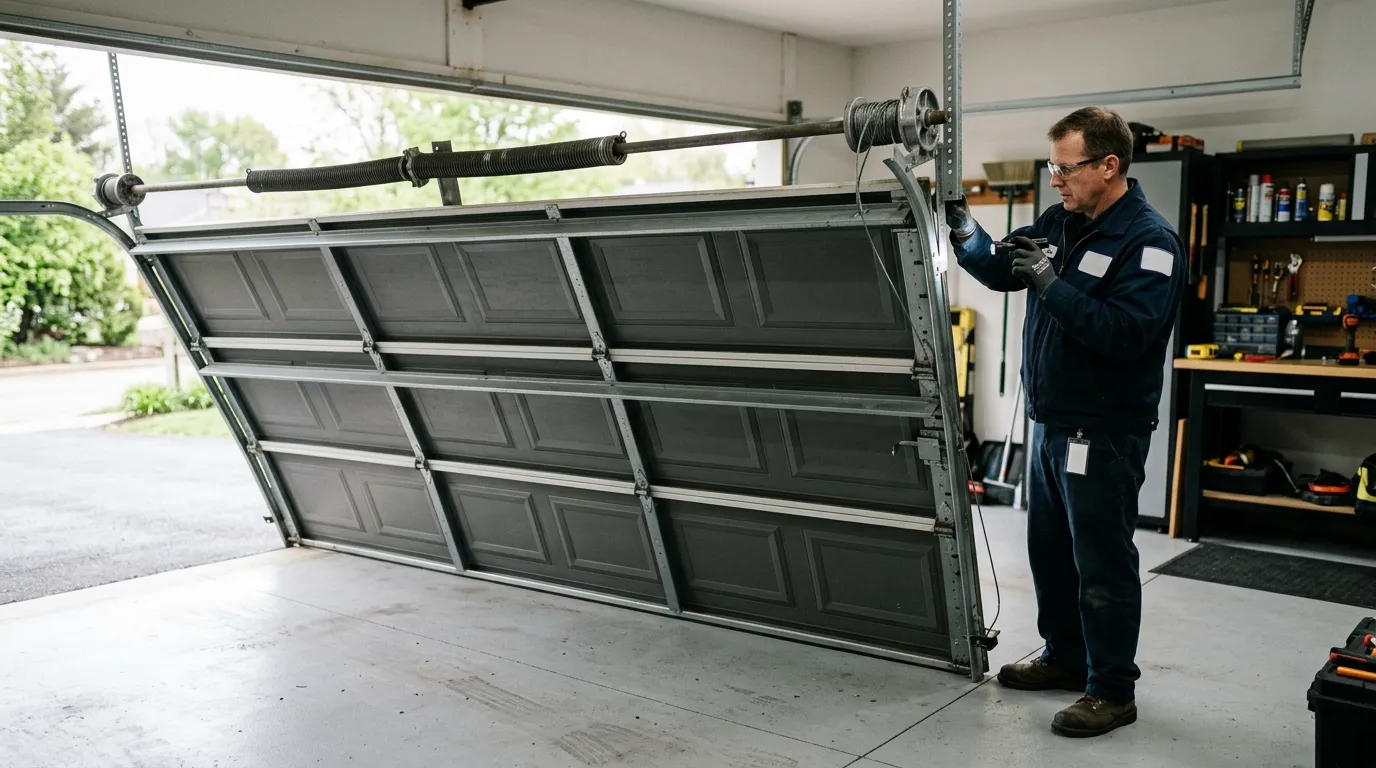
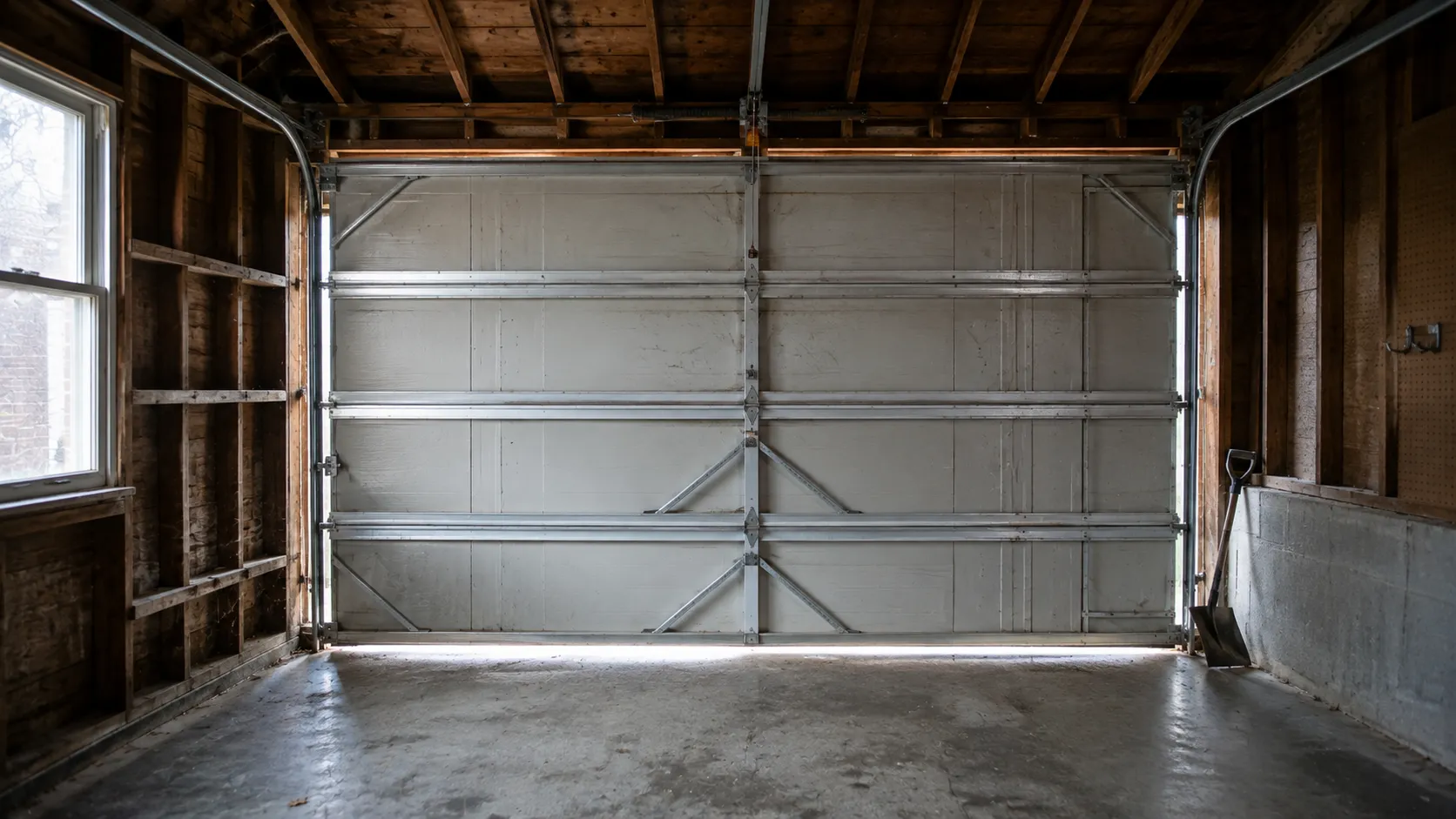
When one of those older brackets pulls even a little from the jamb, the track goes out of plumb relative to the door panel. The rollers ride the edge of the track instead of the center, and eventually they walk right off it. On a newer build, this is a fifteen-minute bracket tightening. On a house from this era, it's often the actual mounting wood that's compressed or split after fifty-plus years of the door's dead weight pulling on it, and that changes the job from a repair to a rebuild of the mounting point itself before you can even talk about the track.
How we work
When It Stops Being a DIY Job
Re-hanging a track that's popped off its rollers looks simple from a video online. It isn't, and here's the honest limitation: if the door is under spring tension - which every torsion and most extension setups are - you're working next to a spring that can put you in the hospital if it lets go while you're leaning into the track. We won't talk anyone through that part over the phone.
If the track came off because a cable snapped or a spring broke, stop. Don't force the door up or down on the rail it's still partly seated on; you'll bend the track further and turn a bracket job into a full track replacement. If it's just a roller that hopped the rail and the door still moves freely by hand with the opener disconnected, that's often something you can reseat yourself with the door manually supported. Past that point, with bent track, a compressed mounting stud, or any tension involved, that's our call, not a weekend project.
Questions
Common questions
Why did my garage door suddenly come off the track after years of working fine?
It's rarely sudden - it's usually a bracket that's been loosening slowly, often from the freeze-thaw cycling that's normal for a Rochester winter. The door finally reaches a point where the track is out of plumb enough that a roller can't stay seated, and it happens on what feels like an ordinary day.
Can I push a garage door back onto its track myself?
Only if the door is not under spring tension and you can verify the track itself isn't bent. If a spring or cable broke at the same time the track came loose, leave it - that's a tension situation and it's not safe to force by hand.
Is a bent track always a full replacement?
No. Steel track, which is common on the older, sturdier builds around Rochester, often straightens and re-seats fine. A track only needs full replacement when the flange is creased or the bend is sharp enough that a roller can't ride it evenly anymore.
Does the age of my house affect this repair?
Yes. Houses built in the median era here, around 1967, often have original or early-replacement mounting hardware. The wood the track brackets are screwed into can compress or split after decades of load, which turns a bracket tightening into a small rebuild of the mounting point.
Ready when you are
Need a garage door sorted in Rochester?
Rochester Garage Door Pros repairs and installs garage doors, springs and openers in Rochester, NY and the surrounding area.