
Guide
When an Old Rochester Garage Door Still Has Life Left
Rochester homes mostly date 1938-1987. See what that housing stock and our severe cold climate mean for repairing versus replacing an aging garage door.
Local detail
What Local Conditions Do
Most of the housing across this service area went up between 1938 and 1987, with the median landing around 1967, and the bulk of it clusters in that 1960s-70s window across the 32 named neighborhoods and suburbs we work in. A door installed anywhere in that stretch has already logged decades of Rochester winters. This region sits in a severe cold climate band, and that matters more for a garage door than almost anything else about it.
Steel panels contract in deep cold and expand again every thaw cycle, which loosens fasteners, stresses weld points on older track brackets, and dries out the lubrication on rollers and hinges faster than a mild climate would. Extension and torsion springs lose tension gradually under repeated cold-hot cycling, so a spring that would last longer in a warmer state often needs replacing sooner here. None of this means an older door is doomed.
A well-built panel from the 1960s or 70s, kept out of standing water and re-lubricated on schedule, can still run true. But the climate is doing quiet damage the whole time, and that's the first thing worth weighing before you decide whether a door is worth saving.
The area
What It Costs
We're not going to hand you a number here, because a fair one depends on what's actually wrong, and we haven't seen your door. What we can tell you is how to think about it. Across the roughly 64,958 owner-occupied houses in this area, a lot of garage doors are original or close to it, which means the hardware attached to them (springs, cables, rollers, sometimes the track itself) is also decades old and built to specs nobody stocks new anymore. Replacing one worn part on an old door sometimes triggers the discovery that three more parts nearby are just as tired.
That's the real cost question: not what one repair runs, but whether you're paying for one job or setting up for three more within a year. With a median household income of $80,135 across the area, most owners we talk to want an honest read on that trade-off rather than the cheapest possible fix now. We'll tell you straight which one you're looking at before any work starts.
What we find
What Is Going On
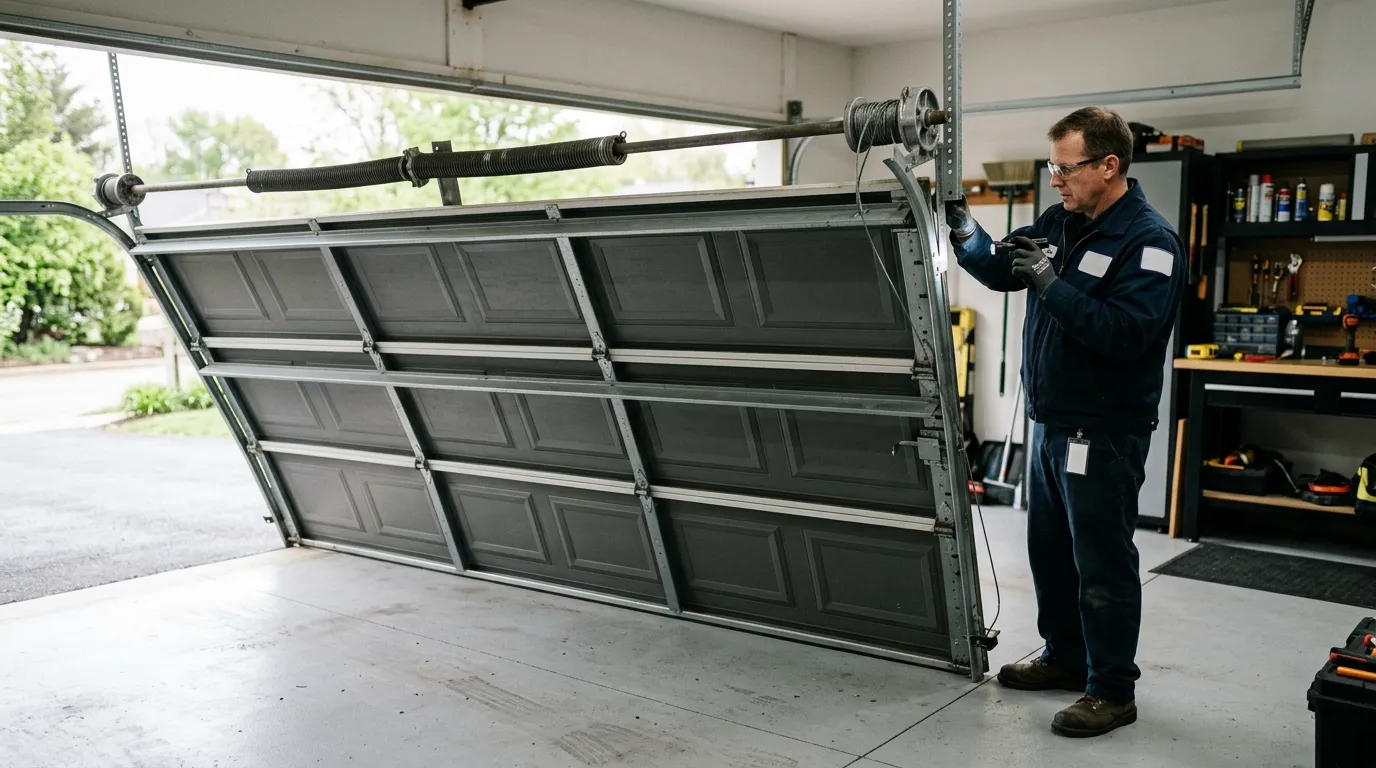
A door from the 1938-1987 window was built for a different set of assumptions. Panels from that era are often heavier gauge steel or solid wood, with hardware sized to match - torsion springs rated for that specific weight, track bent to a radius that newer low-headroom kits don't replicate. When something fails on a door like this, the fix usually isn't a universal part off a shelf.
It's a part matched to a system that predates most of what a supply house carries today. That's not automatically bad news. Heavier original panels often outlast the thinner steel used in a lot of newer doors, and a torsion spring system properly matched and maintained can run for years past what people expect.
The trouble shows up when one piece of the original system fails and nothing on hand fits it cleanly - a track that's slightly bowed from 50 years of settling, a spring cone that doesn't match anything current. At that point the question isn't whether the door is old, it's whether the specific failure is a part swap or a sign the whole system needs to come out.
How we work
When It Stops Being a DIY Job
Anything involving a torsion spring is not a weekend project, on an old door or a new one - the spring is under enough tension to cause a serious injury, and that doesn't change based on the door's age. On an older system it's worse, because you're often dealing with hardware that isn't labeled the way current parts are, so you can't just match a number and order online. If a cable has jumped its drum, if the door is off-track, or if a panel is cracked at a hinge point on a door built before the 1980s, that's a call-a-pro job, full stop.
Where we draw an honest line: if you're just tightening loose hardware, lubricating rollers and hinges, or replacing weatherstripping, that's reasonable to do yourself and won't hurt anything if you get it wrong. We won't try to talk you out of that kind of upkeep. But once you're touching anything under spring tension, or the door is old enough that the parts aren't clearly labeled, that's where a homeowner's second attempt usually costs more than the first call would have.
Questions
Common questions
How do I know if my garage door is original to the house?
If your house was built in the 1960s or 70s, which covers most of this area, check the panel material and the spring type. Original doors from that window are often heavier steel or solid wood with torsion or extension hardware sized to match. If nobody's replaced it, a tech can usually confirm the age by the hardware style during a visit.
Is it worth replacing an old door instead of repairing it?
It depends on what's failing. A single worn part on an otherwise sound older door is often worth fixing. If you're looking at a bowed track, a cracked panel, and old springs all at once, replacement usually makes more sense than chasing three repairs on hardware that's hard to match.
Does Rochester's winter really affect garage door parts that much?
Yes. This area sits in a severe cold climate band, and the repeated freeze-thaw cycling loosens fasteners, stresses weld points, and shortens spring life compared to a milder climate. It's one of the bigger reasons older doors here need more frequent hardware checks than the manual suggests.
Can I replace a garage door spring myself?
No, not safely. A torsion spring is under high tension regardless of the door's age, and mishandling it can cause serious injury. On an older door, the hardware may also not match current labeled parts, which makes it more of a job for someone who can source the right match.
Ready when you are
Need a garage door sorted in Rochester?
Rochester Garage Door Pros repairs and installs garage doors, springs and openers in Rochester, NY and the surrounding area.