
Rochester, NY
Garage Door Service for Rochester Homes
Rochester homes built 1938-1987 face cold-climate strain on springs and tracks. We service and repair garage doors across Rochester, NY and nearby towns.
What we do
Garage door work in Rochester
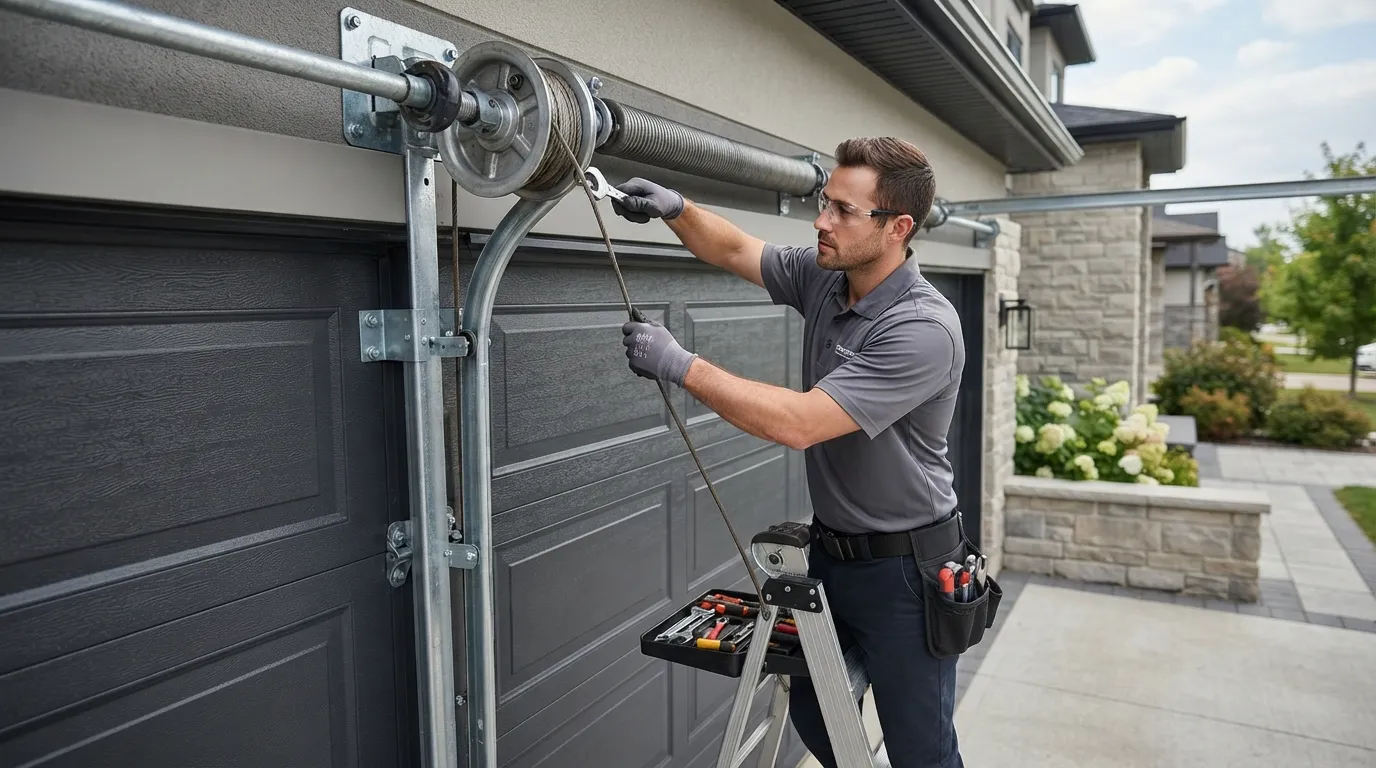
Garage Door Repair Built for Rochester's Older Housing Stock and Cold Winters
Rochester garage door repair for houses built 1938-1987, from Group 14621 to the 19th Ward. Learn more →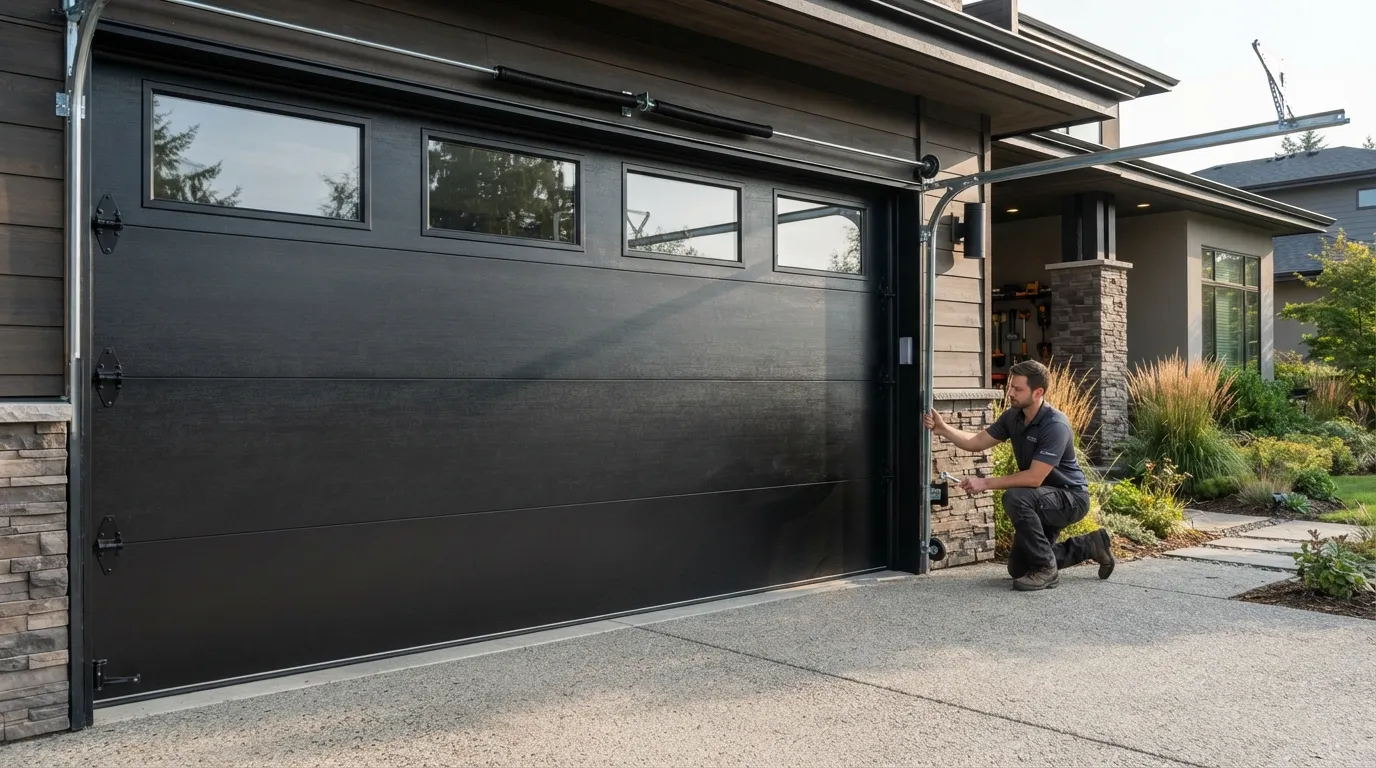
Garage Door Installation for Rochester Homes
Installing garage doors for Rochester's 1940s-1980s housing stock, built for a cold-severe climate that older single-layer doors were never designed to handle. Learn more →Local detail
What Causes It Around Here
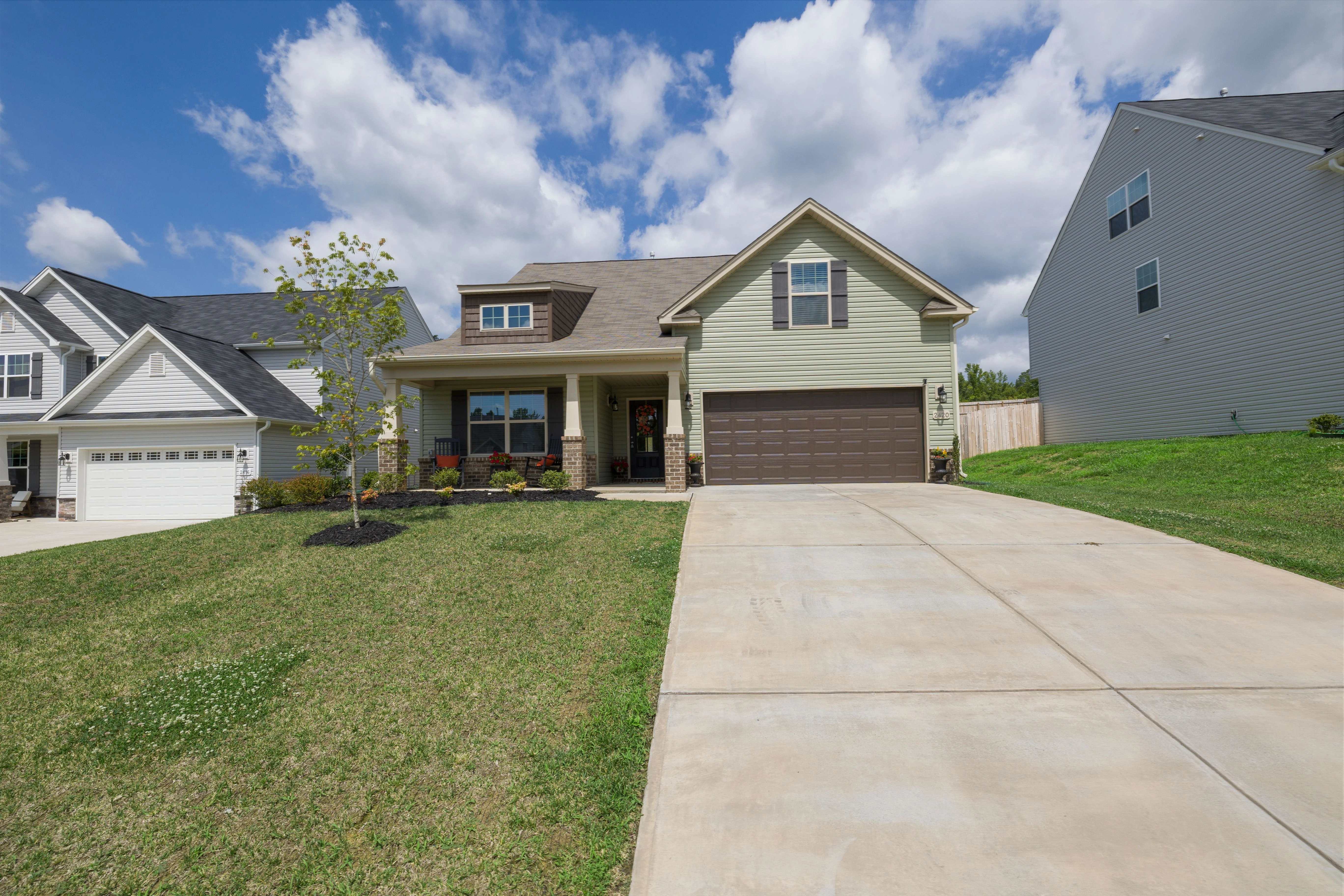
Most of the doors we get called on sit in houses built between 1938 and 1987, with the median close to 1967. That's a specific window - it means original torsion or extension spring setups, older track gauges, and hardware that was matched to a door twenty, thirty, sometimes fifty pounds lighter than what's on the opening today. Across the 32 named pockets of this service area, from Group 14621 to Maplewood Historic District to the Lyell-Otis side of town, that 1960s-70s housing stock shows the same wear pattern because it went up in the same few decades under the same building practices.
Then there's the winters. Rochester sits in a cold climate band the federal data marks as severe, and that matters more than people think. Steel spring wire fatigues faster with repeated hard freezes and quick thaws - the metal contracts, the coil tightens, and a spring that had another year left in a milder climate snaps here instead. Track brackets shift slightly as the slab and framing move with frost. None of this is dramatic on its own. It's cumulative, and it lands hardest on doors that are already near the end of a normal service life because of when the house was built.
The area
What Can Go Wrong
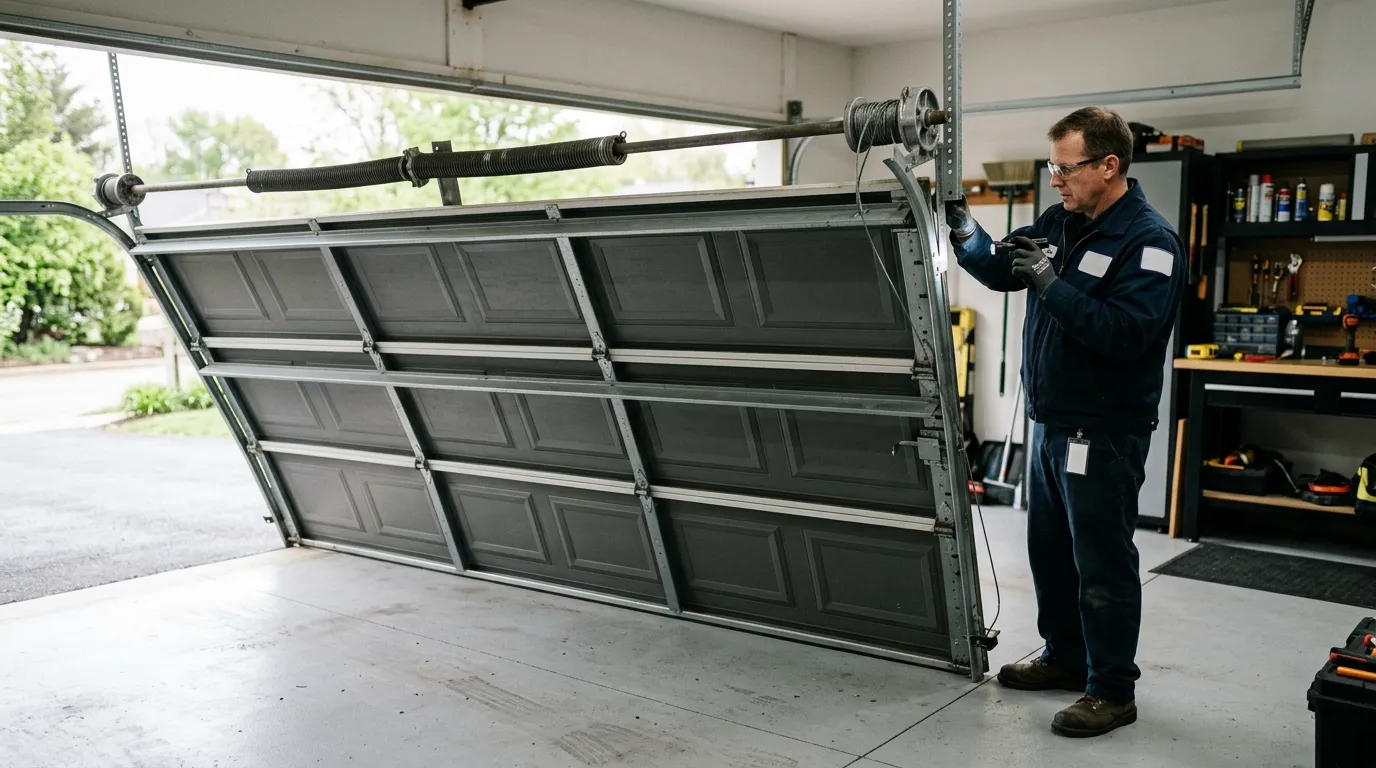
The most common call is a broken torsion spring - usually one side of a double door, sometimes both if they were installed as a pair and have logged the same number of cycles. On older homes with the original single spring on a double-wide door, that spring is carrying weight it was probably never sized for by today's standards, and cold makes the failure sudden rather than gradual.
After springs, we see rollers that have gone brittle and started cracking in the track, especially in unheated or barely-heated garages where the metal never really warms up between openings in January and February. Cables fray at the drum for the same reason - repeated cold-stiffened cycling wears the strands faster than a moderate climate would.
Panels on older steel doors can develop hairline cracks near the hinge points, from decades of expansion and contraction in a severe cold band. And openers - especially older chain-drive units original to a 1960s or 70s build - start straining against a door that's slightly out of balance from any of the above, which shortens the motor's life on top of everything else. None of these are rare or unusual for this area. They're what you'd expect from this housing stock in this climate.
What we find
How We Fix It
We start by checking balance and spring condition before touching anything else, because a door that's out of balance will burn out a new opener just as fast as it burned out the old one. If it's a spring, we replace it sized to the actual door weight, not just whatever was on there before - that matters more on older homes where the original spring may have been undersized from the start.
Worn rollers and frayed cables get swapped as a set on that side of the door rather than patched individually, since if one cable's gone brittle from cold cycling, its match usually isn't far behind. Track alignment gets checked against the framing, not just eyeballed, since older houses in this service area have had decades to settle.
Here's the honest limitation: if a steel panel has cracked in more than one spot or the door's insulation has failed badly enough that the panel itself is warping, we'll tell you replacement is the better call rather than patching a door that's going to keep giving you trouble. Repair makes sense when the door is structurally sound and the fault is in the spring, cable, roller, or track. It doesn't make sense when the door itself is the problem.
How we work
How It Shows Up
Usually it starts small. The door hesitates for a second before it moves, or one side seems to drop slightly faster than the other on the way down - that's a spring going, not an opener problem, even though the opener often gets blamed first. A loud bang from the garage, especially on a cold morning, is almost always a spring letting go.
Some owners notice the opener straining audibly, working harder than it used to, which is often a sign the door's balance has shifted and the motor is compensating. Others see a roller stuck partway in the track, or hear a grinding sound as it drags rather than rolls.
With 128,344 households in this service area and 64,958 of them owner-occupied houses, a lot of these calls come from people who've lived in the same house for years and know its normal sounds well enough to notice when something's changed. That instinct is usually right. If a door that's always opened quietly starts making noise, or a door that's always been smooth starts catching, that's worth a call before it becomes a stuck door on the coldest morning of the year.
Questions
Common questions
Why do garage doors break more often in winter here?
Rochester's climate falls in the severe end of the cold band, and steel springs and cables fatigue faster with repeated hard freeze-thaw cycles. A spring that might last another year in a milder climate often snaps here instead, especially on older homes where the spring was sized for a lighter door to begin with.
My house was built in the 1960s - is that relevant to a garage door problem?
Yes. Median housing age across this service area is around 1967, and a lot of that stock still runs original or early-replacement spring and track hardware. That hardware is now approaching or past sixty years old, which is well beyond a normal spring's cycle life even without cold-weather wear added in.
How do I know if it's the spring or the opener?
If the door hesitates, drops unevenly, or you heard a bang, that points to a spring. If the opener motor sounds like it's working unusually hard but the door still moves smoothly once it gets going, the balance may be off rather than the motor being the root problem.
Is it ever better to replace the door instead of repairing it?
Sometimes. If a steel panel has cracked in more than one place or the insulation has failed enough that the panel is warping, patching it further usually isn't worth it. We'll tell you plainly when repair no longer makes sense instead of billing for a fix that won't hold.
Ready when you are
Need a garage door sorted in Rochester?
Rochester Garage Door Pros repairs and installs garage doors, springs and openers in Rochester, NY and the surrounding area.