
Rochester, NY
Garage Door Repair Built for Rochester's Older Housing Stock and Cold Winters
Rochester garage door repair for houses built 1938-1987, from Group 14621 to the 19th Ward. We fix springs, openers, and tracks stressed by Rochester winters.
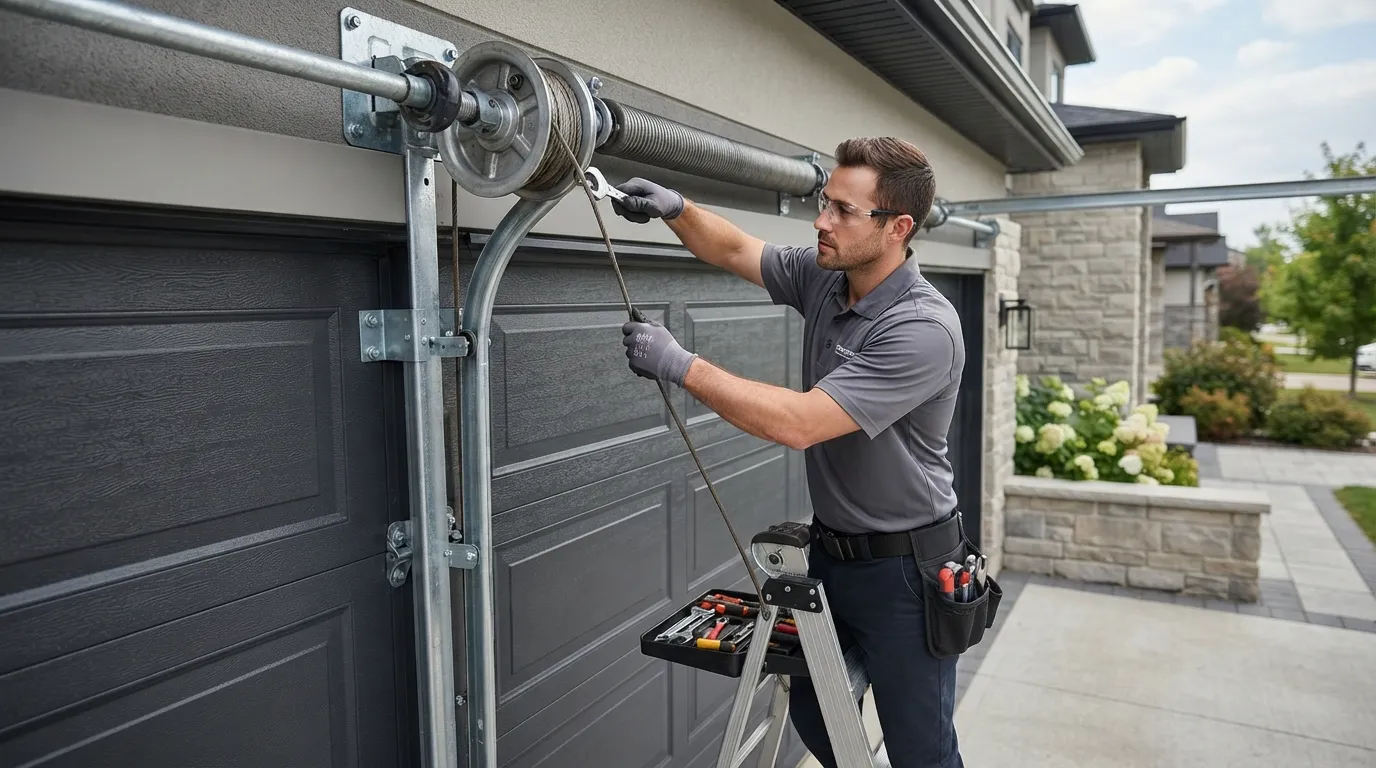
What we do
Garage door work in Rochester
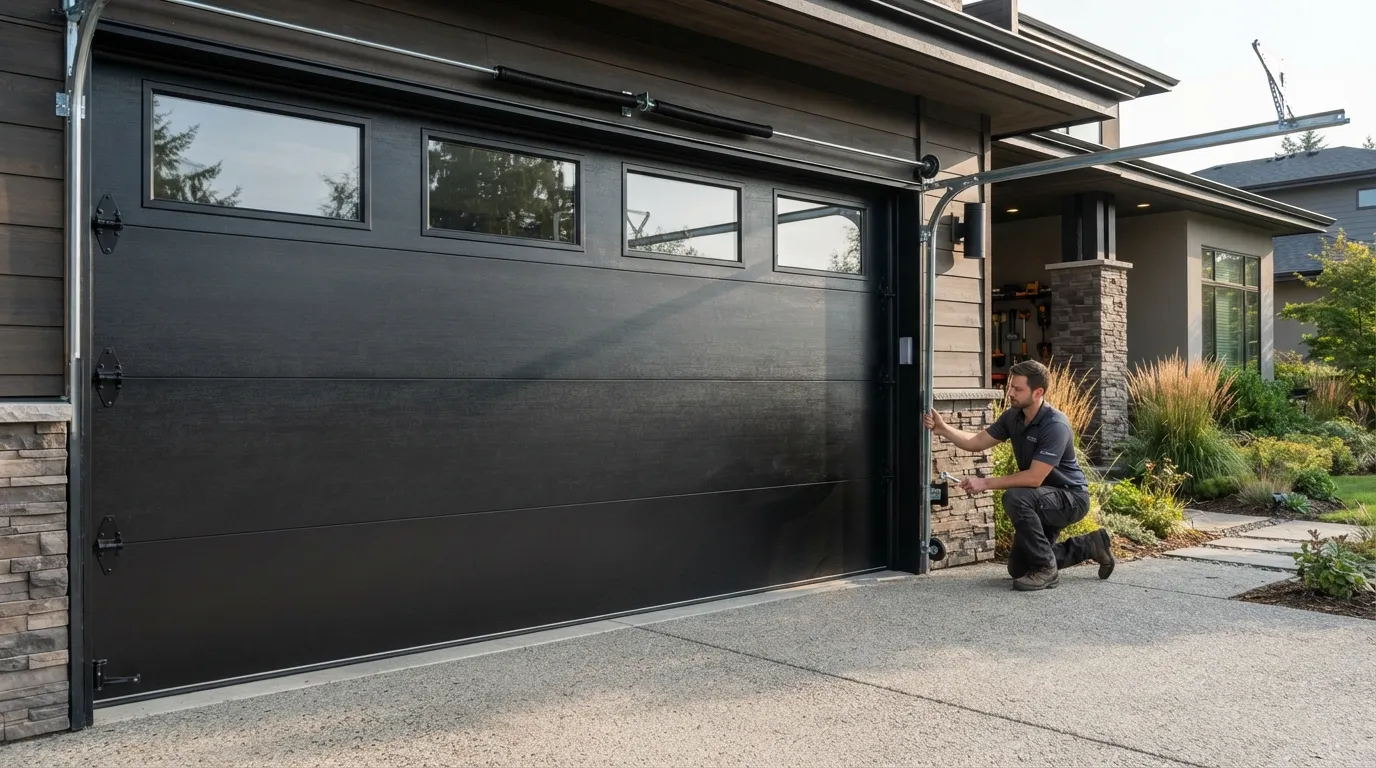
Garage Door Installation for Rochester Homes
Installing garage doors for Rochester's 1940s-1980s housing stock, built for a cold-severe climate that older single-layer doors were never designed to handle. Learn more →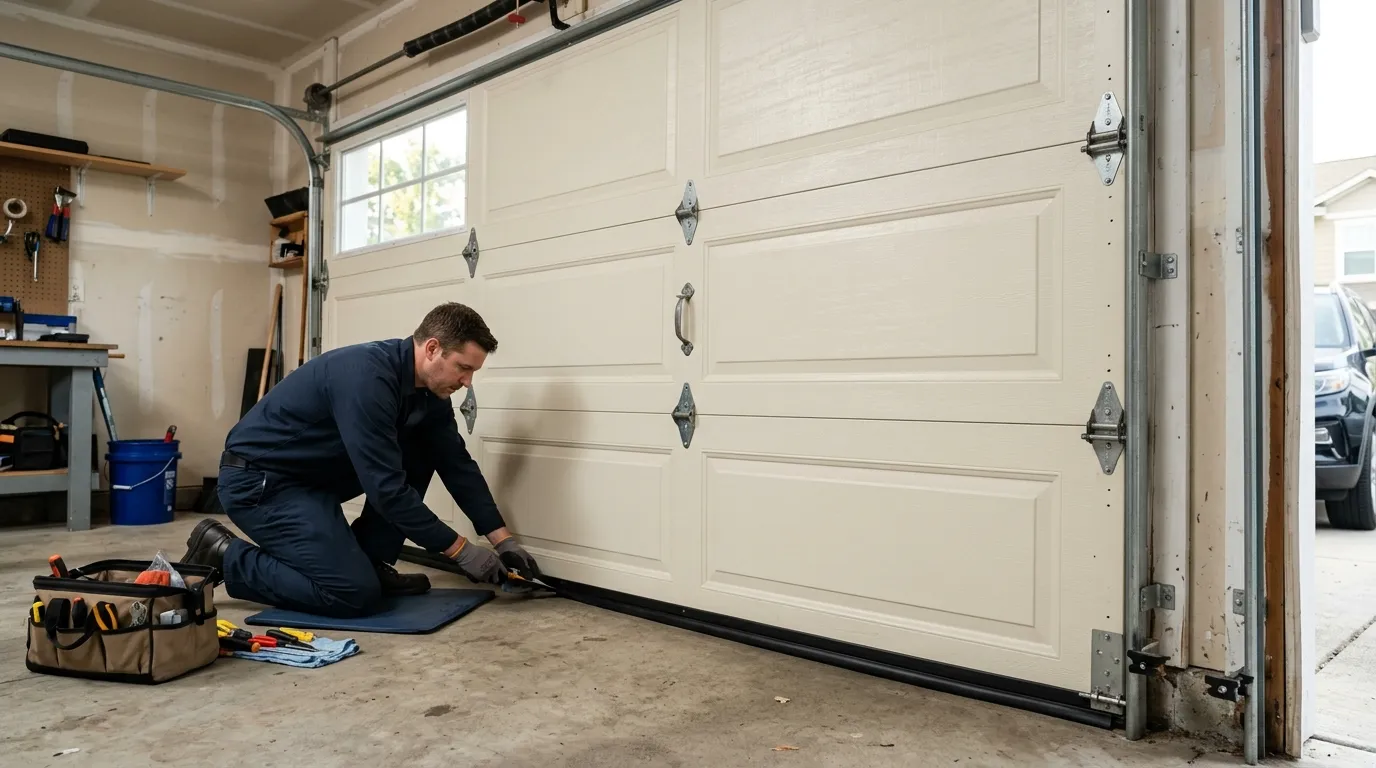
Garage Door Service for Rochester Homes
Rochester homes built 1938-1987 face cold-climate strain on springs and tracks. Learn more →Local detail
What Causes It Around Here
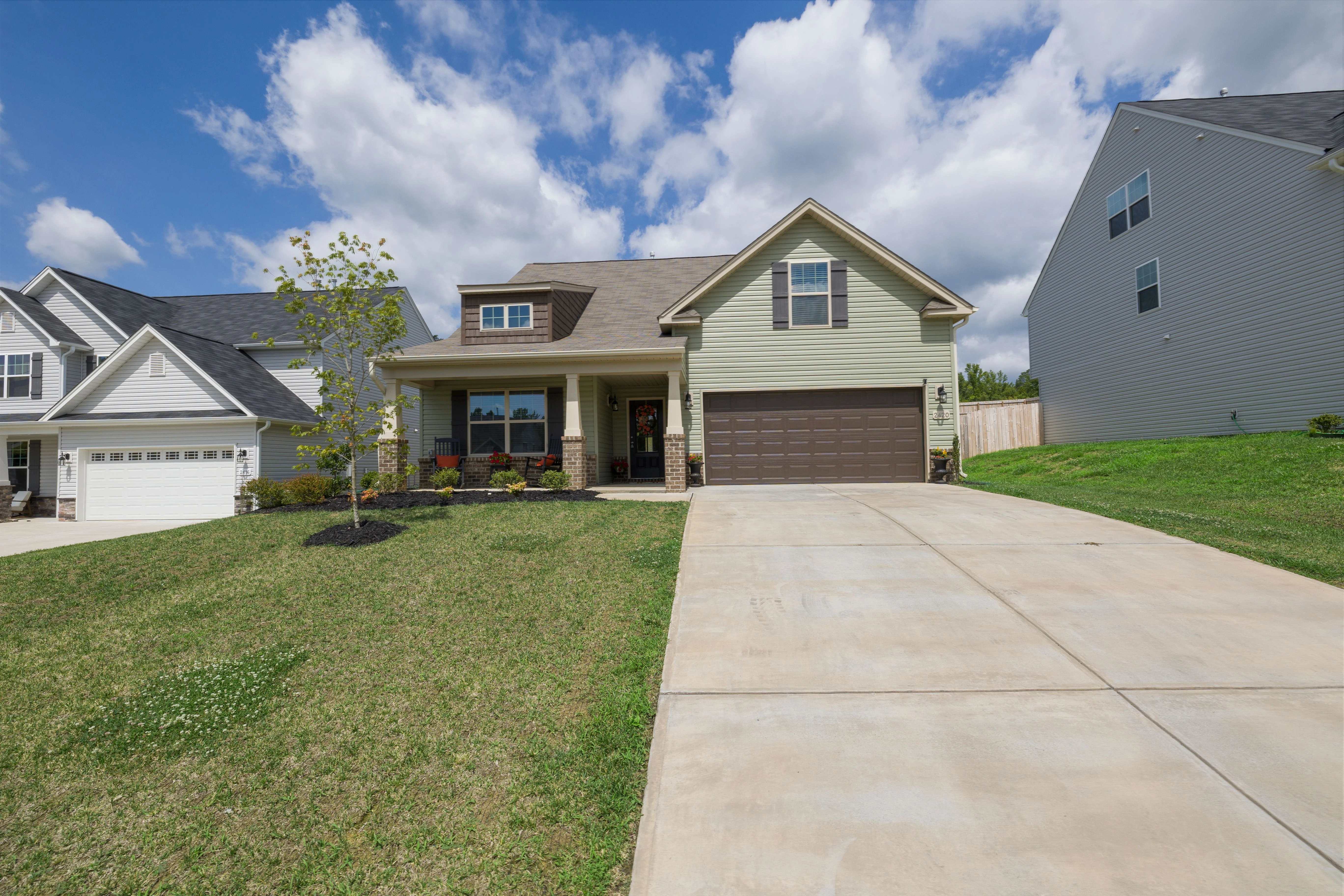
Most of the housing across this service area went up between 1938 and 1987, with the median right around 1967. That means a lot of garages still running the torsion or extension spring hardware that came with the house, sized for a lighter door and never upgraded. Add a climate band that the federal data classifies as cold and severe, and you get metal that contracts hard every winter.
Springs lose tension faster in repeated freeze-thaw cycles than they do in a mild climate, and the steel tracks bolted to a 1960s stud wall shift slightly every time the frame settles with frost. In neighborhoods like Maplewood Historic District or North Winton Village, where the original garage was often an afterthought bolted onto an older house, you'll see tracks that were never quite plumb to begin with, which makes the cold-weather binding worse. Newer subdivisions out toward the edges of the area don't escape it either - a lot of that stock is still from the same 1960s-70s wave, so the hardware age is similar even where the house looks newer.
This isn't a defect in any one door. It's forty-plus years of expansion and contraction doing what it does to steel and old fasteners.
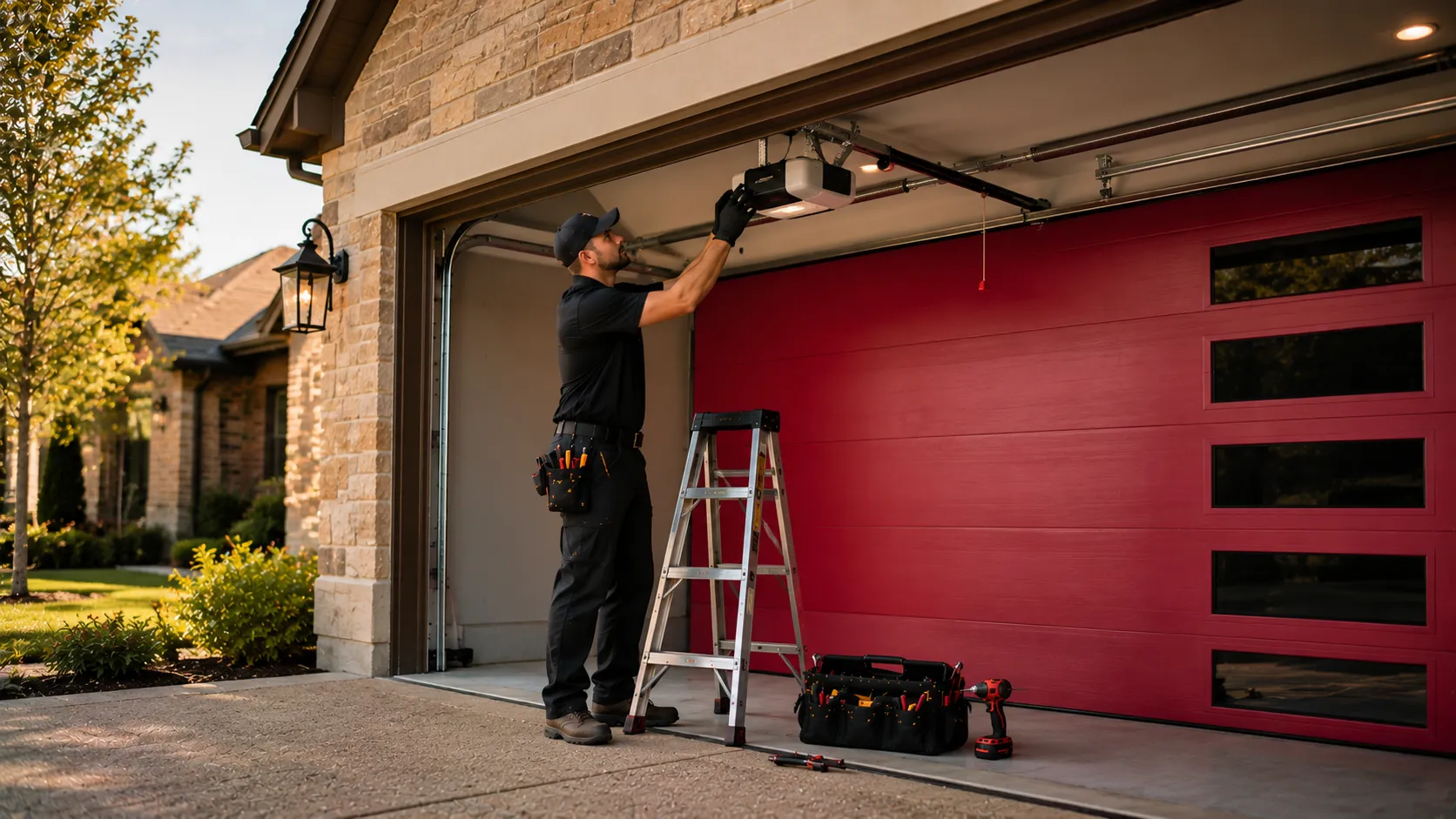
The area
What Can Go Wrong
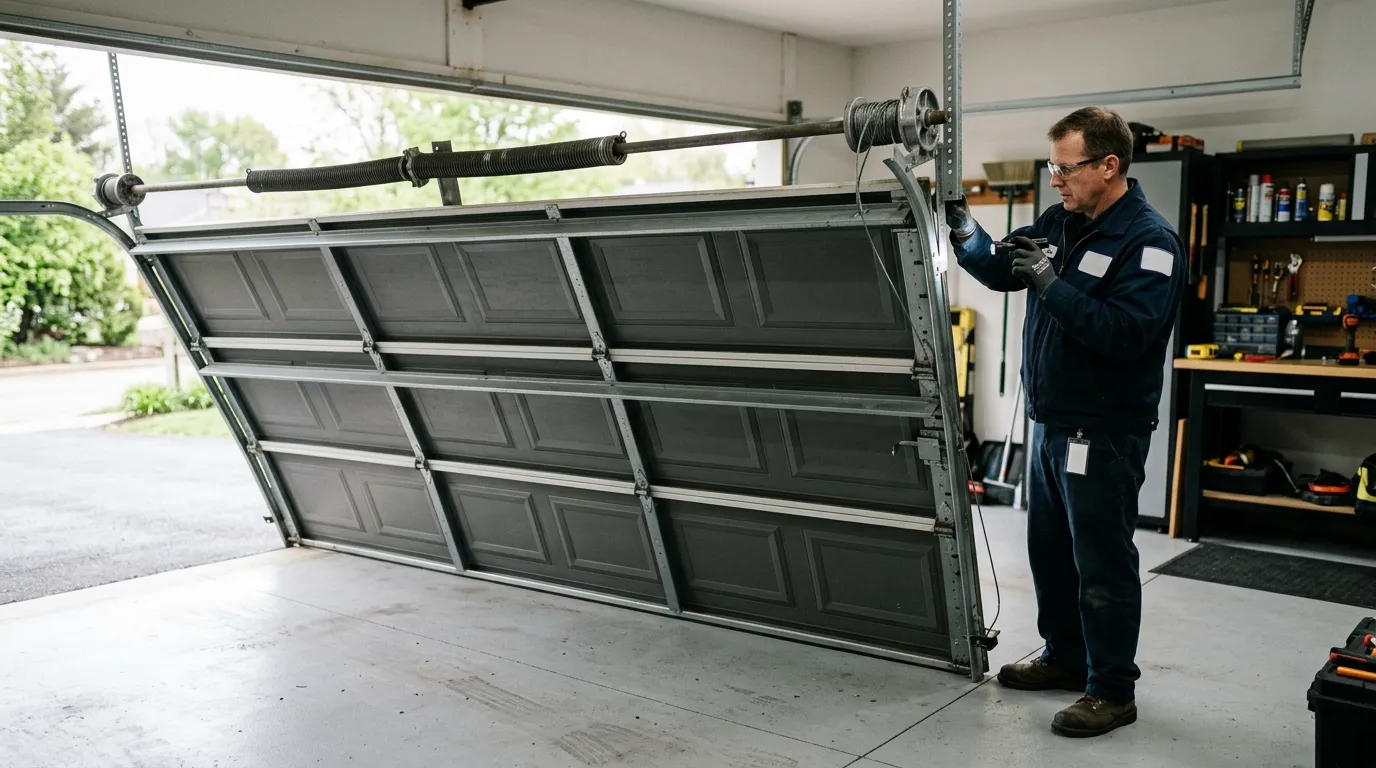
The most common call we get is a broken torsion spring - the coil above the door that does the actual lifting. On a house from the 1960s stock common across this area, that spring has usually seen decades of cold-weather cycling, and it lets go without much warning, usually as a loud bang. After that, opener strain is next: the motor tries to lift a door with no spring assist, which burns out gears and drive components fast. Rollers crack in cold weather because old nylon rollers get brittle below freezing, and a cracked roller binds in a track that's already slightly out of alignment from decades of settling.
Cables fray at the drum when a spring is under-tensioned and the door doesn't lift evenly. And on older wood-panel doors still found in some of the pre-1970s houses, panel warp from moisture and freeze cycling puts uneven load on the whole track system. None of these show up in isolation for long - a worn roller left alone turns into a bent track, and a bent track puts extra strain on the opener.
What we find
How We Fix It
We size springs to the door and the climate load it's actually carrying, not just whatever was on the wall before - a door that's been fighting a weak spring for years needs a proper torque calculation, not a like-for-like swap. Track realignment comes before opener work every time, because an opener fighting a bent track will fail again even after a repair. For cold-climate households, we check roller material and swap brittle nylon for something that holds up better below freezing.
Cable replacement is a full-set job, not a one-side patch - if one cable frayed from uneven tension, the other side is close behind on a door with the same age and mileage. One limitation worth saying plainly: on doors from the original 1938-1967 construction wave, we sometimes can't get an exact match for older panel hardware, and at that point replacement is the honest answer over trying to keep patching original parts that nobody makes anymore.
How we work
How It Shows Up
You'll usually hear it before you see it - a bang from the garage on a cold morning, or a door that suddenly won't budge even though the opener motor is running. Sometimes it's slower: the door starts closing crooked, dropping faster on one side than the other, which is a cable or spring going unevenly. In houses with an attached garage under a bedroom, common across the older stock in this area, you might notice the opener working harder and louder before anything visibly breaks - that grinding sound is the motor trying to compensate for lost spring tension.
A door that reverses on its own partway down is often a sensor or track issue rather than a spring, so it's worth telling us exactly what you're seeing when you call. We work across the area from Downtown out through Irondequoit, Gates, Brighton, and Greece, and further out to Penfield, Fairport, and Webster.
Questions
Common questions
Why did my garage door spring break in the winter with no warning?
Torsion springs lose tension gradually through repeated cold-weather cycling, and in a climate classified as cold and severe, that wear speeds up. On a house from the 1960s-70s stock common in this area, the spring has usually had decades of that cycling. It doesn't fail slowly - it lets go all at once, usually with a loud bang.
Is it worth repairing an old wood-panel garage door or should I replace it?
On doors from the earlier end of the 1938-1987 construction range, exact hardware matches get hard to find. If the panels are warped from moisture and freeze cycling, we'll tell you honestly when replacement makes more sense than patching parts that are no longer manufactured.
How do I know if it's the spring or the opener that's failing?
If the opener motor runs but the door barely moves or doesn't lift evenly, that's usually a spring or cable problem, not the opener itself. A grinding or straining sound before any visible failure is often the motor compensating for lost spring tension. Tell us exactly what you hear and see when you call.
Ready when you are
Need a garage door sorted in Rochester?
Rochester Garage Door Pros repairs and installs garage doors, springs and openers in Rochester, NY and the surrounding area.