
Guide
Noises That Mean Something: A Rochester Homeowner's Guide
Rochester homes built mostly in the 1960s and 70s show specific door and spring wear from cold winters. Here's what each noise means and when it's serious.
Local detail
What Local Conditions Do
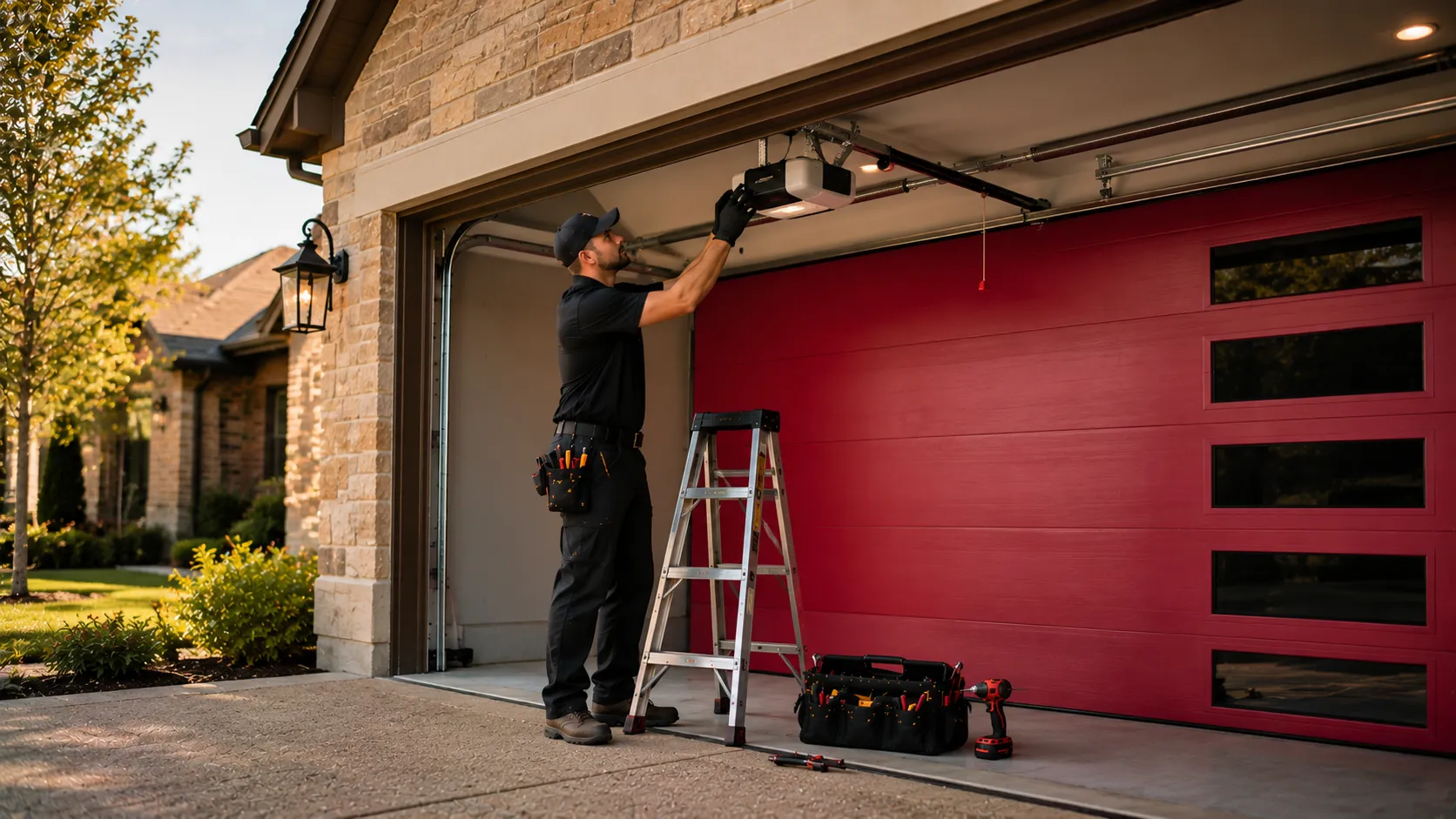
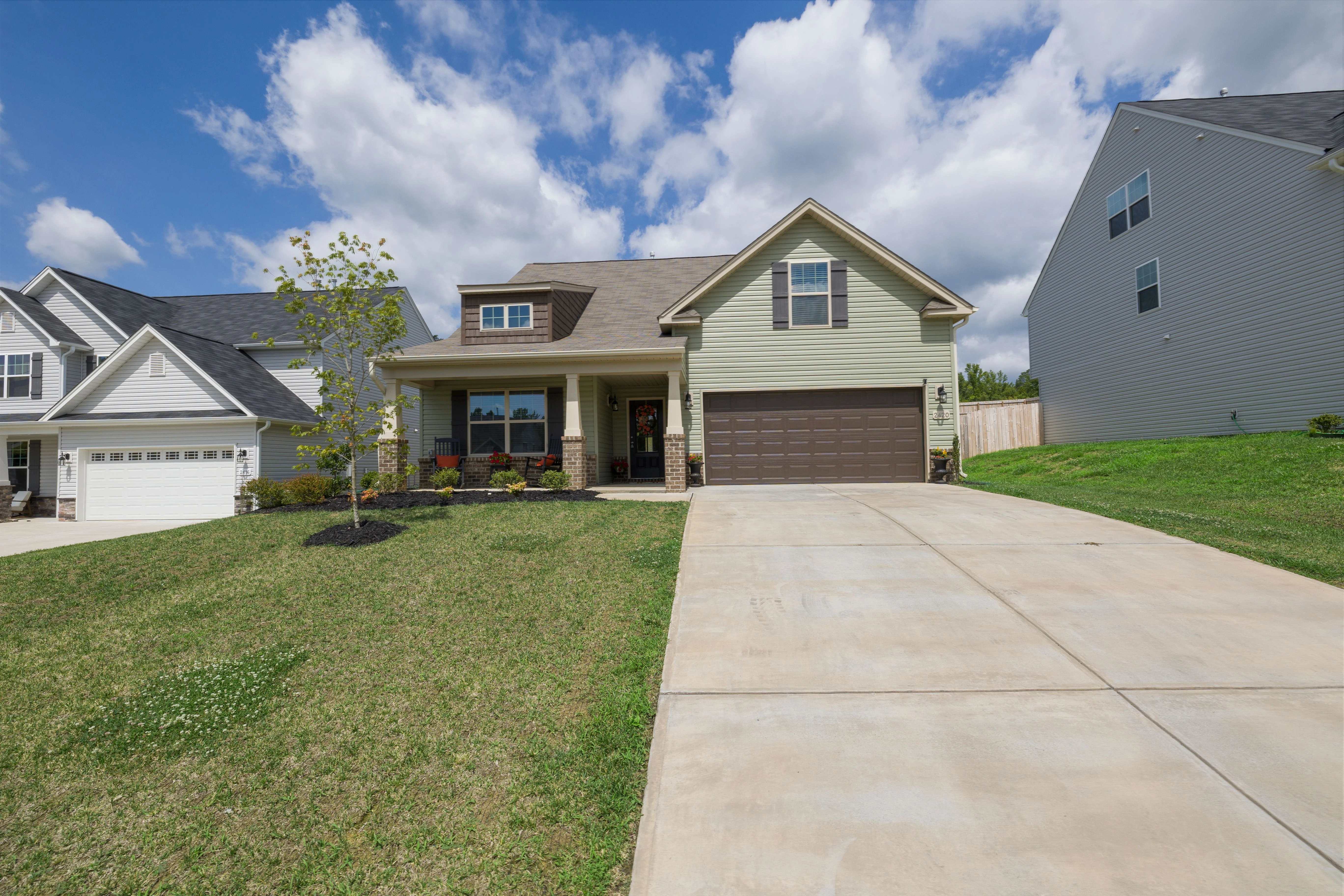
Most houses in the Rochester service area went up between 1938 and 1987, with the median landing around 1967. That means a lot of the doors still in service are on hardware that was standard for that era: single torsion springs on 16-foot doors, steel tracks that were never sized for insulated panels, and rollers that have outlasted three or four re-paintings of the trim around them. Add a cold-severe climate band and you get a specific failure pattern.
Steel contracts in the cold, so a track that was a hair out of plumb in July is binding in January. Grease that worked fine at 50 degrees turns to paste at 10, which is why a door that opened quiet all fall starts grinding the first hard freeze. Lift cables see more load in the cold because the spring itself is stiffer and slower to return, so a fraying cable on an older Rochester door tends to show up as a shudder right at the top of the travel, not a smooth glide.
None of this is dramatic. It's just what happens when 1960s-and-70s-era hardware meets a real winter, year after year, in houses across the 32 named areas that make up most of this stock.
The area
What It Costs
I can't give you a number here without a name on the door in front of me, and I'm not going to guess at one. What I can tell you is what drives the cost up or down on the kind of houses common in this area. A single spring swap on original hardware from the 1960s or 70s stock is usually a straightforward job because the parts are common sizes even if they're old.
Where it gets more expensive is when the track has been reshaped by years of a door running slightly bound in the cold, or when the opener is original and the mounting bracket has to be rebuilt to take a new one. Median household income in the service area is $80,135, which is worth mentioning only because it tells you this isn't a market where corners get cut on parts to hit a rock-bottom quote - most jobs here are done with steel that will actually hold up through another Rochester winter, not the cheapest spring on the shelf. If a shop quotes you a number before looking at the door, that number is a guess.
What we find
What Is Going On
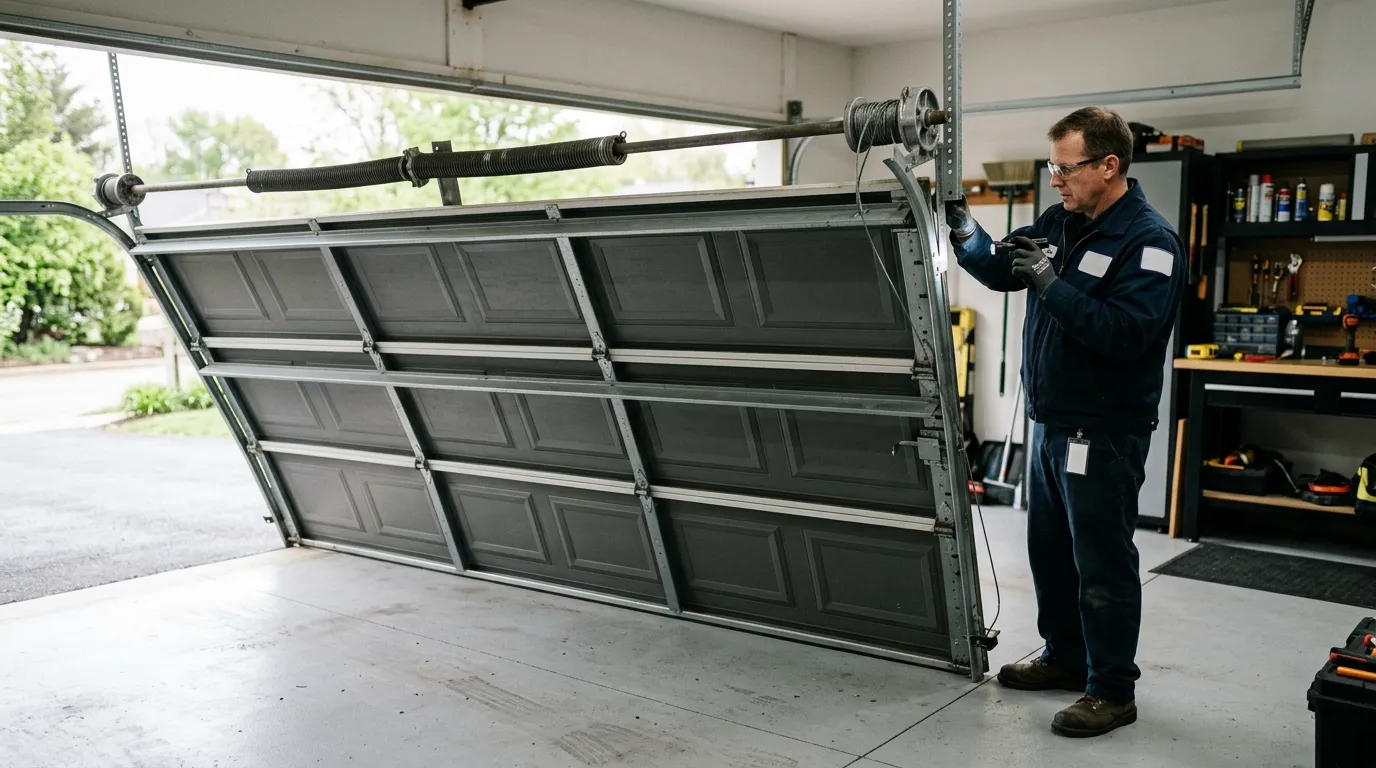
A loud bang, once, usually means a spring let go - on a 1960s or 70s door that's original hardware, that's a torsion spring rated for decades of cold-weather cycling finally giving out. A rhythmic thump every few seconds as the door moves usually means a flat spot on a roller, common on doors that have been rolling on the same steel or nylon rollers since before anyone thought to spec plastic. A grinding sound low down, near the bottom panel, is often track misalignment made worse by cold contraction - steel track pulls a fraction of an inch out of true in a hard freeze, and a door that cleared it in summer starts scraping. A high squeal at the top of travel is usually a dry top roller or a cable starting to fray on the drum; in a cold-severe climate, dry grease seizes faster than in a mild one, so this shows up here more than it would somewhere warmer.
A slow grumble that gets worse over weeks, not days, points to opener gear wear - common on original openers still running in houses from this era's housing stock. None of these are emergencies by themselves. Ignored through a whole winter, most of them become one.
How we work
When It Stops Being a DIY Job
Grease and a tightened bolt handle a lot of it. What you should not touch yourself is anything on the spring side of the door - the torsion spring and the cable drums are under enough tension to take a hand off, and that's true whether the door is five years old or from the original 1967-median stock still common across this area. If the door is off its track, if a cable has come off the drum, or if the door drops instead of easing down when you disconnect the opener, stop and call.
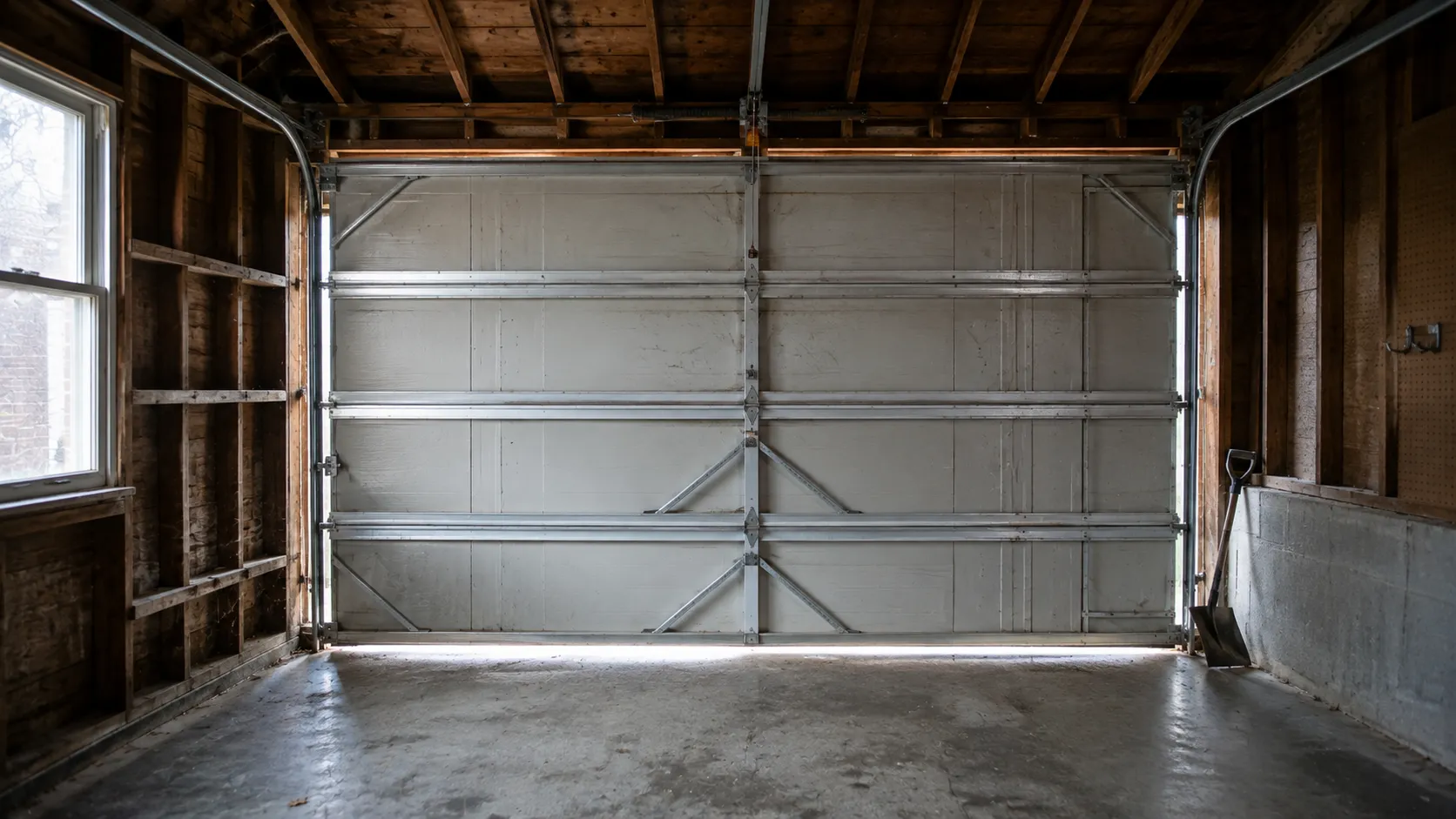
I'll also say plainly: on a door old enough to match the bulk of the housing here, sometimes the honest answer is replacement, not repair. If the track is bent from years of cold-weather binding and the springs, rollers, and cables are all near end of life at once, patching one part just moves the next failure a few months down the road. That's not a sales pitch - it's the same math whether the shop makes more money on the repair or the replacement.
Questions
Common questions
Why does my garage door only make noise in the winter?
Steel track and hardware contract in cold weather, and grease thickens, both of which are more pronounced in a cold-severe climate like Rochester's. A door that runs quiet through summer can develop a bind or a squeal as soon as temperatures drop, especially on original hardware from the 1960s-70s housing stock common here.
Is a loud bang always a broken spring?
Usually, yes, if it happened once and the door won't open afterward. On a lot of Rochester houses built in that 1938-1987 range, the springs are original or close to it, and a sudden loud bang followed by a dead-weight door is the classic sign a torsion spring has let go.
Can I fix a noisy roller myself?
Lubricating a dry roller or tightening a loose hinge bolt is fine to do yourself. Replacing a roller means working near the track and sometimes the cable, which is where I'd say stop and call rather than push through it on your own.
Does the age of my house affect what's likely wrong with the door?
Yes. Most of the service area's housing dates to 1938-1987 with a median around 1967, so a lot of doors are still on original or first-replacement hardware sized for that era. That hardware wears in specific, predictable ways that newer doors don't show yet.
Ready when you are
Need a garage door sorted in Rochester?
Rochester Garage Door Pros repairs and installs garage doors, springs and openers in Rochester, NY and the surrounding area.