
Guide
Garage Doors Built for a Different Rochester
Rochester Garage Door Pros on why doors built for houses from 1938-1987 fail differently in this cold climate, what drives repair cost, and when to stop patching.
Local detail
What Local Conditions Do
Most of the houses this company works on went up between 1938 and 1987, with the bulk of that stock dating to the 1960s and 70s. That matters because doors from that era, and even a lot of the replacement doors installed on those houses since, were never built with a thermal break or a real weatherseal system. They were built before insulation rules pushed manufacturers to seal the panel edges and back the steel with foam.
Rochester sits in a cold, severe climate band, and that combination - an uninsulated door skin on a house built decades before energy codes tightened up - is why so many calls here start with the same complaint: cold air pouring in along the bottom seal, condensation running down the inside of the panels, or a door that's stiff and hard to lift on the coldest mornings because the hardware never accounted for repeated freeze-thaw cycling.
Across the 32 named areas in this service territory, from Downtown out to places like Group 14621 and the Maplewood Historic District, you see the same pattern: original doors, or first-generation replacements, that were sized and sealed for a milder expectation than what a Rochester winter actually delivers. The fix usually isn't cosmetic. It's about the door's actual thermal and structural spec versus the house it's sitting on.
The area
What It Costs
We don't have a price list to hand you here, and we're not going to make one up. What we can tell you is what drives the number up or down on a house like the ones common in this area. A door built to the original 1960s-70s spec is often narrower in track clearance and lighter in gauge than what's sold today, so a straight swap-in replacement isn't always possible - sometimes the jamb or header needs work first, and that adds labor before the door itself is even part of the conversation.
Median household income across the service area runs around $80,135, which is worth mentioning only because it tells you this isn't a market where cutting corners on a cold-climate door pays off long term - a cheaper door without a thermal break will cost more in heating bleed and repeat service calls than the upfront savings are worth.
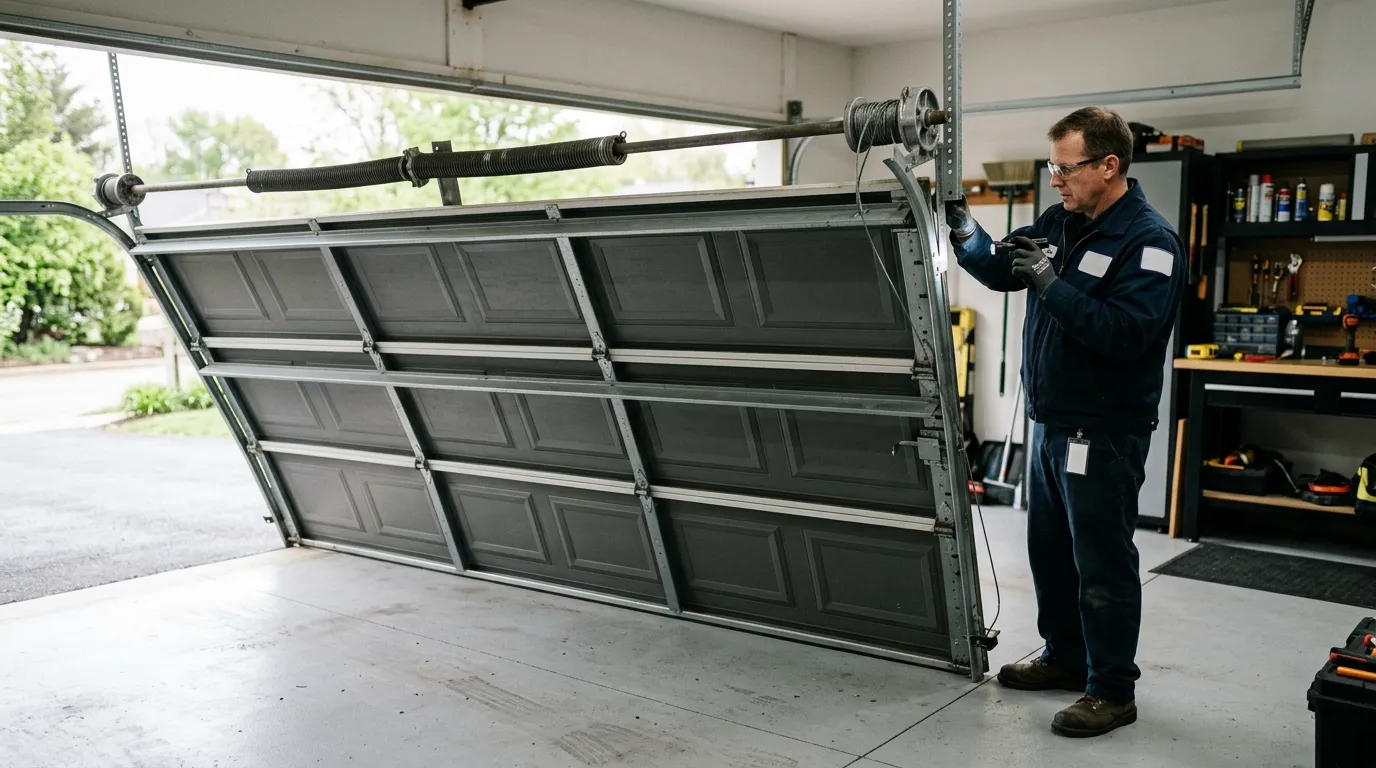
Springs, cables, and rollers are a separate cost bucket from the door itself, and on older torsion setups common in this housing stock, the hardware is frequently undersized for a heavier insulated replacement panel, so it gets replaced at the same time rather than left to fail six months later.
What we find
What Is Going On
When a call comes in from a house built in that 1938-1987 window, the diagnosis usually starts with the same question: is this the door failing, or the house catching up to it? A door that's fine in September and won't seal in January is telling you the cold, severe swings this region gets are exploiting a gap that was always there - a warped panel, a seal that shrank, hardware with just enough play that ice finds it.
Houses in neighborhoods like Lyell-Otis, the 19th Ward, or North Winton Village tend to share panel widths and track geometry from when they were built, which means a technician who knows the era can often spot the likely failure before opening the door up. That's not magic, it's just recognizing the same 1960s hardware pattern for the tenth time.
The honest limitation here: we can diagnose and repair what's in front of us, but we can't retrofit insulation into a door that was never designed to hold it. Sometimes the seal fix is temporary because the panel itself has reached the end of what it can do.
How we work
When It Stops Being a DIY Job
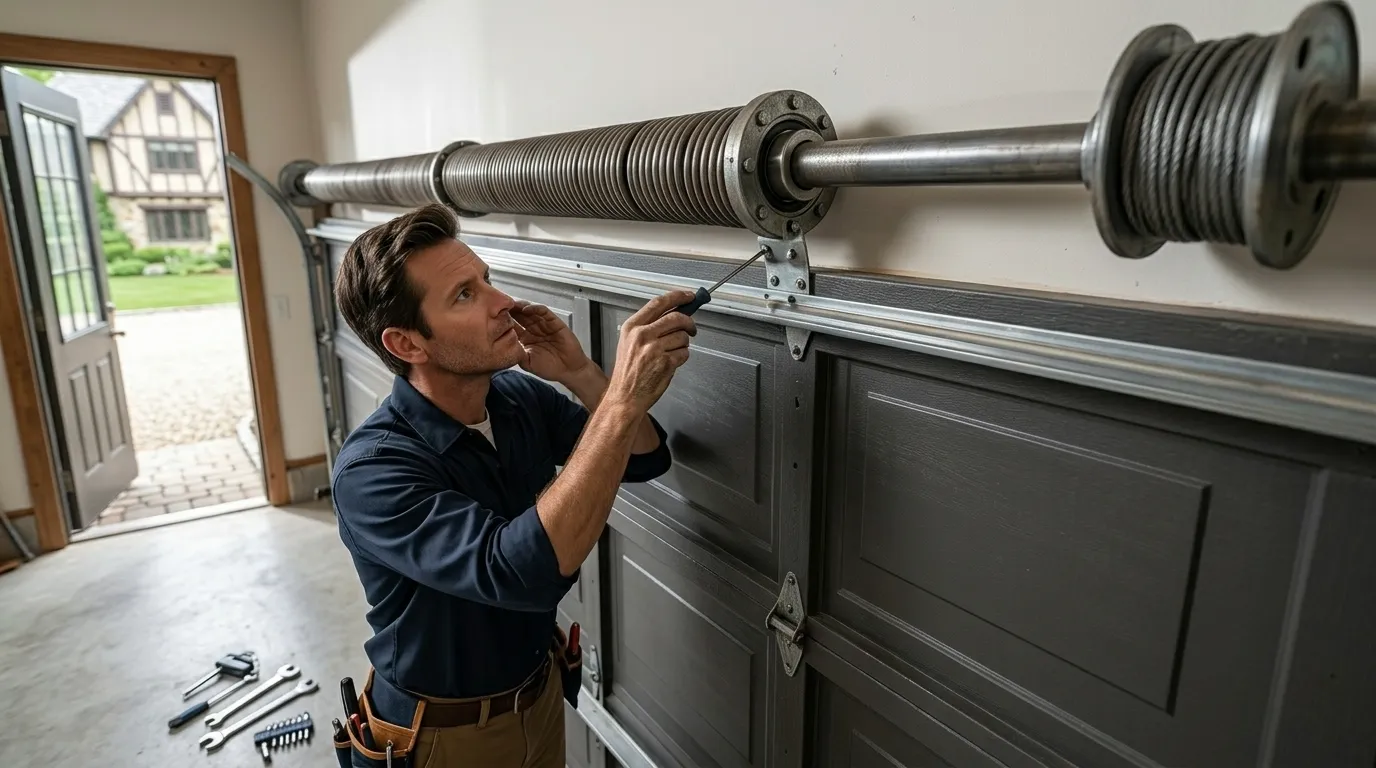
A stiff spring or a seal you can staple back on is reasonable weekend work. A torsion spring under full tension on a door built for a house this old is not - the hardware sizing on original 1960s and 70s installs often doesn't match what's sold in stores now, and guessing wrong under load is how people get hurt.
If the door is original to a house from the 1938-1987 range and you're seeing rust at the track brackets, panel separation at the seams, or a header that's shifted, that's past a seal replacement. That's a structural call, and it's worth having someone look at the whole assembly rather than patching the symptom you can see.
We'd rather tell you a repair isn't worth it than sell you three service calls over two winters. If the door's frame and hardware are original to a house from that era and showing multiple failure points at once, replacement is usually the honest answer, not another spring.
Questions
Common questions
Why does my garage door stick every winter but work fine the rest of the year?
On houses built in the 1960s and 70s common around Rochester, the original door hardware wasn't spec'd for repeated freeze-thaw cycling. Cold, severe winters here tighten tolerances on tracks and rollers that were already marginal, so a door that runs fine in summer binds up once temperatures drop and stays that way until it warms up.
Is it worth insulating an old garage door instead of replacing it?
Depends on the door. If the panel and frame are original to a house from the 1938-1987 era, retrofitting insulation kits can help some, but the seals and track clearance were never built around a thermal break, so you're often working around the door's original design rather than fixing it. Sometimes replacement is the more honest fix.
How do I know if my garage door is original to my house?
If your house was built between 1938 and 1987, especially in the 1960s-70s window that covers most of this area's housing stock, and the door has never been replaced, the track width and hardware gauge usually give it away. A tech familiar with the era can generally confirm it on sight.
Ready when you are
Need a garage door sorted in Rochester?
Rochester Garage Door Pros repairs and installs garage doors, springs and openers in Rochester, NY and the surrounding area.